fresh bytes
Subscribe Now

How to build a phononic computer

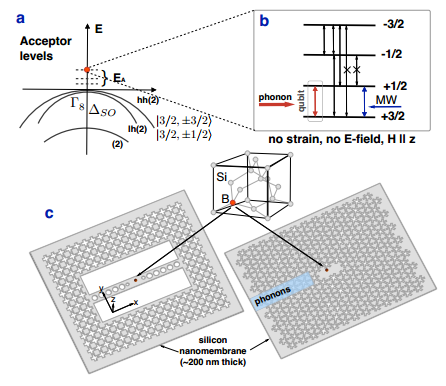
Phonon_cavity.png

The science of how light interacts with matter is called quantum electrodynamics or QED and the theory on which it is based is one of the crowning achievements of 20th century physics.

Today, it lies at the heart of an emerging technology called circuit-QED, in which photons trapped on a silicon chip are made to interact with superconducting devices called artificial atoms, which have various energy levels just like real atoms.   

This is a promising tool for quantum computation. Circuit-QED devices manipulate quantum information as it is transferred from light to matter and vice versa. And the fact that this all takes place on a single chip allows unprecedented control.
via Technology Review


Continue reading 

Leave a Reply

featured blogs
May 6, 2026
Hollywood has struck gold with The Lord of the Rings and Dune'”so which sci-fi and fantasy books should filmmakers tackle next?...

featured paper

Want early design analysis without simulation?

Sponsored by Siemens Digital Industries Software

Traditional verification methods are failing today's complex IC designs, which require a proactive, early-stage analysis approach. A shift-left methodology addresses IP block integration challenges and the limitations of traditional simulation and ERC tools. Insight Analyzer detects hard-to-find leakage issues across power domains, enabling early analysis without full simulation. Identify inefficiencies earlier to reduce rework, improve reliability, and enhance power performance.

Click to read more!

featured chalk talk

GaN for Humanoid Robots
Sponsored by Mouser Electronics and Infineon
In this episode of Chalk Talk, Eric Persson and Amelia Dalton explore why power is the key driver for efficient and reliable robot movements and how GaN technologies can help motor control solutions be more compact, integrated and efficient. They also investigate the role of field-oriented control in humanoid robotic applications and why the choice of a GaN power transistor can make all the difference in your next humanoid robot project!
Apr 20, 2026
26,179 views