fresh bytes
Subscribe Now

How the automobile (and youth culture) led to raccoons taking over Germany

1482581720217753382.jpg

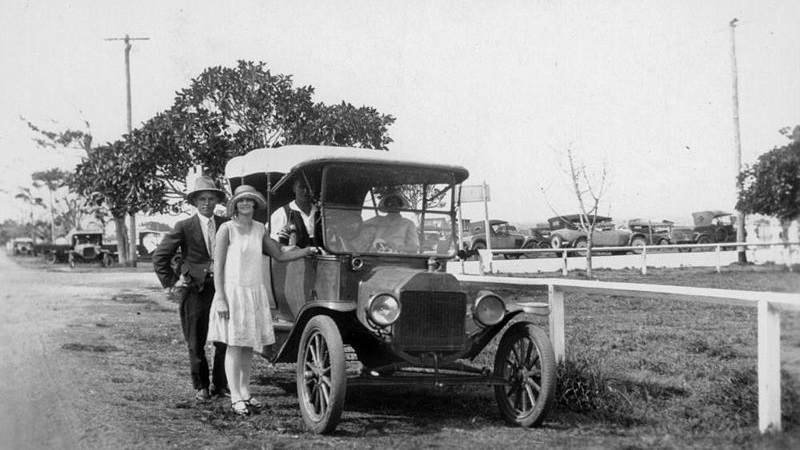
The butterfly effect is a funny thing. You never know where one discovery will lead. Take the automobile: It changed the world, transforming cities and small towns. And it also led to raccoons leaving America—and, possibly, taking over Europe.

In the 1910s and 1920s, the automobile was taking off both as a practical invention and as a symbol of youth, freedom, and rebellion. While it had many advantages, warmth wasn’t one of them. The whistling wind and the lack of enclosure, along with the occasional breakdown due to unpaved roads or faulty equipment, meant any driver had to wear warm clothing. The people who bought the first cars could have chosen any coats they wanted, but being kids, naturally chose the equivalent of ripped jeans, cowboy boots, or a battered leather jacket—the raccoon-skin coat.
via Gizmodo


Continue reading 

Leave a Reply

featured blogs
Apr 2, 2026
Build, code, and explore with your own AI-powered Mars rover kit, inspired by NASA's Perseverance mission....

featured paper

Quickly and accurately identify inter-domain leakage issues in IC designs

Sponsored by Siemens Digital Industries Software

Power domain leakage is a major IC reliability issue, often missed by traditional tools. This white paper describes challenges of identifying leakage, types of false results, and presents Siemens EDA’s Insight Analyzer. The tool proactively finds true leakage paths, filters out false positives, and helps circuit designers quickly fix risks—enabling more robust, reliable chip designs. With detailed, context-aware analysis, designers save time and improve silicon quality.

Click to read more

featured chalk talk

Connecting the World Through Space
Sponsored by Mouser Electronics and Qorvo
In this episode of Chalk Talk, Ryan Jennings from Qorvo and Amelia Dalton explore the critical components and design challenges inherent in LEO satellite infrastructure and how Qorvo’s solutions are enabling the next generation of space-based connectivity. 
Mar 30, 2026
22,782 views