

fresh bytes
Subscribe Now

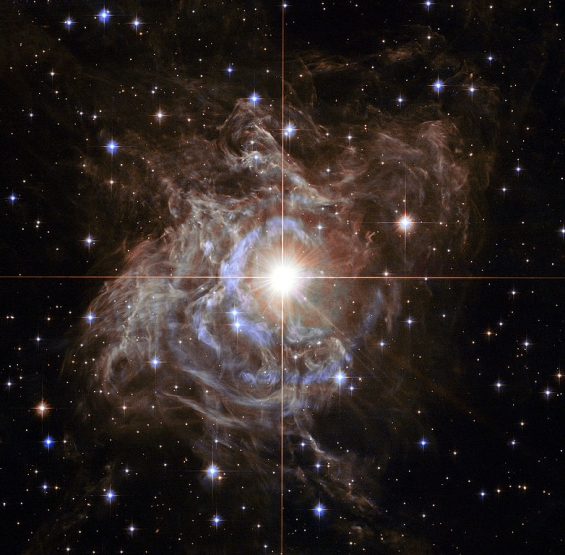
How do we measure distances to other stars?

stars.jpg

Earlier this month, astronomers were excited to discover three supernovas in far-off galaxy, with a huge galaxy cluster sandwiched between us and them. The galaxies’ enormous gravity magnified the light of the exploding stars, an effect called gravitational lensing.

Since these were a particular type of exploding star, they can be used as cosmic yardsticks. That means astronomers were able to check the prescription, as it were, of the gravitational lenses. This is important for measuring the structure of the Universe (including dark matter), and for making sure astronomers’ measuring tools are calibrated correctly.
via DVICE

Continue reading 

Image: Wikipedia

Leave a Reply

featured blogs
Apr 24, 2026
A thought experiment in curiosity, confusion, and cosmic consequences....

featured paper

Quickly and accurately identify inter-domain leakage issues in IC designs

Sponsored by Siemens Digital Industries Software

Power domain leakage is a major IC reliability issue, often missed by traditional tools. This white paper describes challenges of identifying leakage, types of false results, and presents Siemens EDA’s Insight Analyzer. The tool proactively finds true leakage paths, filters out false positives, and helps circuit designers quickly fix risks—enabling more robust, reliable chip designs. With detailed, context-aware analysis, designers save time and improve silicon quality.

Click to read more

featured chalk talk

Connecting the World Through Space
Sponsored by Mouser Electronics and Qorvo
In this episode of Chalk Talk, Ryan Jennings from Qorvo and Amelia Dalton explore the critical components and design challenges inherent in LEO satellite infrastructure and how Qorvo’s solutions are enabling the next generation of space-based connectivity. 
Mar 30, 2026
28,964 views






