fresh bytes
Subscribe Now

Formula 1 racing changes pose big data challenge

emc-lotus-f1-car.jpg

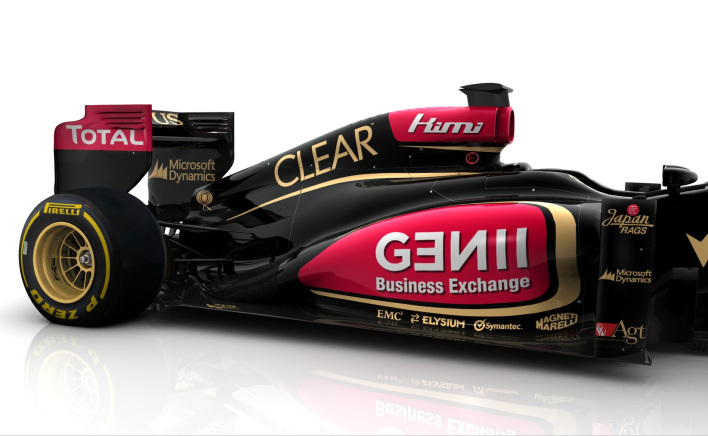
You’d be hard pressed to find a better use case for big data number crunching than Formula 1 racing, where the cars blasting around the track are largely designed, simulated and built on computer screens. There’s a reason for that: as expensive as all that compute fire power is, it’s still cheaper than doing it all manually. Every day the real team spends testing a car out on track costs $400,000 to $450,000, said Patrick Louis, CEO of the Lotus F1 team. 

For that reason, with its use of advanced computational flow dynamics (CFD) and CAD/CAM operations, Formula 1 racing is a demanding test case for compute and storage infrastructure.  When the real cars do hit the track, each vehicle runs 240 sensors which generate 25 megabytes of data per lap driven. That data is uploaded via satellite link to the factory — the engine data is split from the chassis data and each stream is analysed for performance and wear and tear.
via Giga OM


Continue reading 

Leave a Reply

featured blogs
May 6, 2026
Hollywood has struck gold with The Lord of the Rings and Dune'”so which sci-fi and fantasy books should filmmakers tackle next?...

featured paper

Want early design analysis without simulation?

Sponsored by Siemens Digital Industries Software

Traditional verification methods are failing today's complex IC designs, which require a proactive, early-stage analysis approach. A shift-left methodology addresses IP block integration challenges and the limitations of traditional simulation and ERC tools. Insight Analyzer detects hard-to-find leakage issues across power domains, enabling early analysis without full simulation. Identify inefficiencies earlier to reduce rework, improve reliability, and enhance power performance.

Click to read more!

featured chalk talk

Analog Output, Isolated Current, & Voltage Sensing Using Isolation Amplifiers
Sponsored by Mouser Electronics and Vishay
In this episode of Chalk Talk, Simon Goodwin from Vishay and Amelia Dalton chat about analog output, and isolated current and voltage sensing using isolation amplifiers. Simon and Amelia also explore the fundamental principles of current and voltage sensing and the variety of voltage and current sensing solutions offered by Vishay that can get your next design up and running in no time.
Apr 27, 2026
16,064 views