

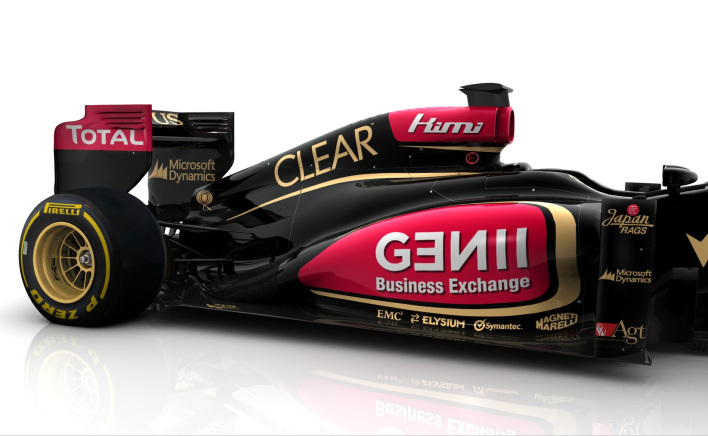
You’d be hard pressed to find a better use case for big data number crunching than Formula 1 racing, where the cars blasting around the track are largely designed, simulated and built on computer screens. There’s a reason for that: as expensive as all that compute fire power is, it’s still cheaper than doing it all manually. Every day the real team spends testing a car out on track costs $400,000 to $450,000, said Patrick Louis, CEO of the Lotus F1 team.
For that reason, with its use of advanced computational flow dynamics (CFD) and CAD/CAM operations, Formula 1 racing is a demanding test case for compute and storage infrastructure. When the real cars do hit the track, each vehicle runs 240 sensors which generate 25 megabytes of data per lap driven. That data is uploaded via satellite link to the factory — the engine data is split from the chassis data and each stream is analysed for performance and wear and tear.
via Giga OM






