fresh bytes
Subscribe Now

Famously damaged Rothko murals restored with light projection

rothko-panel-one-640x578.jpg

What if restoration didn’t require retouching a single element of the artist’s original paint strokes and carvings? MIT’s Media Lab, in partnership with Swiss researchers and the Harvard Art Museums, found a perfect art restoration situation that could benefit from a no-touch solution: the university’s long-hidden murals made by modern art legend Mark Rothko.

In a report from NPR affiliate WBUR, museum and MIT staff discussed a unique light projector solution to restoring the Rothko series. The five-mural collection was originally installed in 1963 in a particularly sunny dining room with a view of the Charles River, and Rothko donated the pieces under the condition that they’d remain in that room with the curtains drawn. That didn’t happen, leading to a wealth of sun damage, not to mention stains from dining room partiers. The university chose to put the murals into hiding to preserve what little of the faded details—and the original “deep crimson, plum” color scheme—remained.
via Ars Technica

Continue reading 

Leave a Reply

featured blogs
Apr 24, 2026
A thought experiment in curiosity, confusion, and cosmic consequences....

featured paper

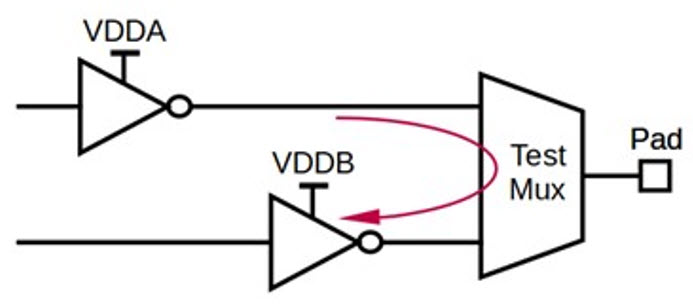
Quickly and accurately identify inter-domain leakage issues in IC designs

Sponsored by Siemens Digital Industries Software

Power domain leakage is a major IC reliability issue, often missed by traditional tools. This white paper describes challenges of identifying leakage, types of false results, and presents Siemens EDA’s Insight Analyzer. The tool proactively finds true leakage paths, filters out false positives, and helps circuit designers quickly fix risks—enabling more robust, reliable chip designs. With detailed, context-aware analysis, designers save time and improve silicon quality.

Click to read more

featured chalk talk

GaN for Humanoid Robots
Sponsored by Mouser Electronics and Infineon
In this episode of Chalk Talk, Eric Persson and Amelia Dalton explore why power is the key driver for efficient and reliable robot movements and how GaN technologies can help motor control solutions be more compact, integrated and efficient. They also investigate the role of field-oriented control in humanoid robotic applications and why the choice of a GaN power transistor can make all the difference in your next humanoid robot project!
Apr 20, 2026
9,964 views