fresh bytes
Subscribe Now

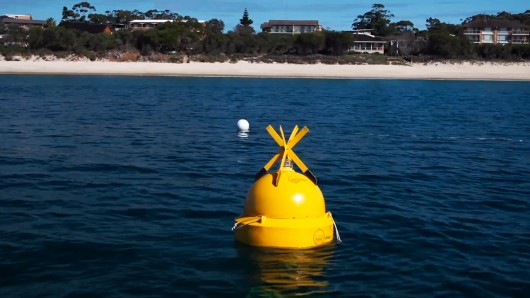
Clever Buoy uses sonar to raise the shark alarm

cleverbuoy.jpg

Currently being developed by Australian tech firm Optus, the buoy is anchored to a seabed-located box, that emits sonar signals into the surrounding water. A processor in the buoy analyzes the reflections of those signals, and is able to identify the sonar signature of shark-sized objects in the vicinity. To lessen the chances of it being fooled by animals like dolphins, it also takes note of how such objects propel themselves through the water, to see if they’re moving in a shark-like fashion.

The idea is that a series of the buoys/boxes could be arranged in a row offshore, running parallel to a beach. Whenever any of them detected a shark, it would send an alert via satellite to the local lifeguard’s smartphone. That person would then sound an alarm, telling all swimmers to get out of the water until the shark had moved on.
via Gizmag


Continue reading 

Leave a Reply

featured blogs
Apr 24, 2026
A thought experiment in curiosity, confusion, and cosmic consequences....

featured paper

Quickly and accurately identify inter-domain leakage issues in IC designs

Sponsored by Siemens Digital Industries Software

Power domain leakage is a major IC reliability issue, often missed by traditional tools. This white paper describes challenges of identifying leakage, types of false results, and presents Siemens EDA’s Insight Analyzer. The tool proactively finds true leakage paths, filters out false positives, and helps circuit designers quickly fix risks—enabling more robust, reliable chip designs. With detailed, context-aware analysis, designers save time and improve silicon quality.

Click to read more

featured chalk talk

Connecting the World Through Space
Sponsored by Mouser Electronics and Qorvo
In this episode of Chalk Talk, Ryan Jennings from Qorvo and Amelia Dalton explore the critical components and design challenges inherent in LEO satellite infrastructure and how Qorvo’s solutions are enabling the next generation of space-based connectivity. 
Mar 30, 2026
28,964 views