

fresh bytes
Subscribe Now

Charles Babbage left a computer program in Turin in 1840. Here it is.

In Autumn of 1840, Charles Babbage arrived in Turin for a meeting of Italian scientists, where he gave the only public explanation of the workings of his “Analytical Engine.” This machine was the mostly-imaginary upgrade of Babbage’s failed “Difference Engine.”

At the Accademia della Scienze di Torino (which was once run by Babbage’s host in Turin, Prof. Giovanni Plana), they still have all the paperwork that Babbage brought with him to Turin, which Babbage left behind as a gift for Plana and his associates.

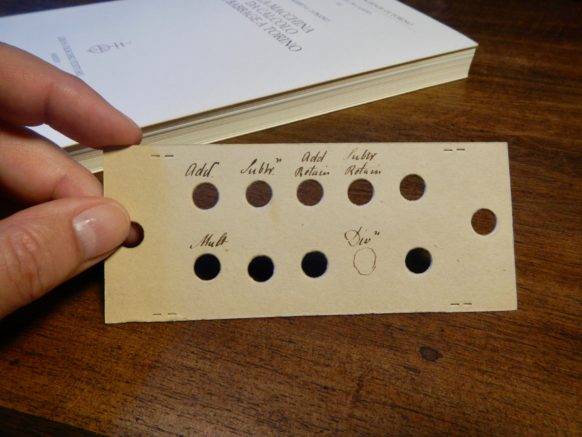
These documents includes charts, engineering plans, lecture notes, a bunch of pencil-scribbled calculations on what seems to be leaves neatly sliced out of Babbage’s own notebooks, and, well, also these punch-cards.


Continue reading on Wired

Leave a Reply

featured blogs
Mar 9, 2026
What happens to our digital history when the world's biggest archive of retro video games disappears?...

featured video

Cadence Chiplets Solutions | Helping you realize your chiplet ambitions

Sponsored by Cadence Design Systems

In this webinar, David Glasco, VP of Compute Solutions at Cadence, discusses how Cadence enables customers to transition from traditional monolithic SoC architectures to modular, scalable chiplet-based solutions, essential for meeting the growing demands of physical AI applications and high-performance computing.

Read eBook: Helping You Realize Your Chiplet Ambitions

featured chalk talk

EU Cyber Resilience Act Compliance Simplified with Infineon Security Solutions
Sponsored by Mouser Electronics and Infineon
In this episode of Chalk Talk, Preeti Khemani from Infineon and Amelia Dalton investigate the scope, categories, and standards included in the EU Cyber Resilience Act. They also explore the timelines associated with the EU Cyber Resilience Act and discuss how Infineon is streamlining compliance to ensure your next design meets CRA requirements.
Mar 10, 2026
6,017 views



