

fresh bytes
Subscribe Now

Building integrated solar panels set to boom over the next 5 years

globalsolar_powerflexbipv.jpg

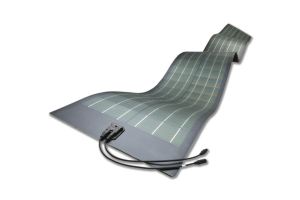
Solar panels that can be integrated right into rooftops and the walls of buildings is a new market that is set to grow dramatically over the next five years, according to a new report from Pike Research, a part of Navigant. The report says that the energy capacity of solar panels that are built into the structures of buildings will grow from 400 MW in 2012 to 2.25 GW in 2017, or a five-fold increase worldwide.

The solar industry calls this technology “building-integrated photovoltaics” or BIPV. Some of this new capacity will come from thin film solar panels that will be able to be printed right onto building materials, like shingles, steel roof casing, and windows. A lot of companies have been gunning for this market, and many have been held back by the difficult solar production market in 2012. There are at least 53 companies working on this tech, says Pike.
via GigaOM


Continue reading 

Leave a Reply

featured blogs
May 6, 2026
Hollywood has struck gold with The Lord of the Rings and Dune'”so which sci-fi and fantasy books should filmmakers tackle next?...

featured paper

Quickly and accurately identify inter-domain leakage issues in IC designs

Sponsored by Siemens Digital Industries Software

Power domain leakage is a major IC reliability issue, often missed by traditional tools. This white paper describes challenges of identifying leakage, types of false results, and presents Siemens EDA’s Insight Analyzer. The tool proactively finds true leakage paths, filters out false positives, and helps circuit designers quickly fix risks—enabling more robust, reliable chip designs. With detailed, context-aware analysis, designers save time and improve silicon quality.

Click to read more

featured chalk talk

GaN for Humanoid Robots
Sponsored by Mouser Electronics and Infineon
In this episode of Chalk Talk, Eric Persson and Amelia Dalton explore why power is the key driver for efficient and reliable robot movements and how GaN technologies can help motor control solutions be more compact, integrated and efficient. They also investigate the role of field-oriented control in humanoid robotic applications and why the choice of a GaN power transistor can make all the difference in your next humanoid robot project!
Apr 20, 2026
25,832 views




