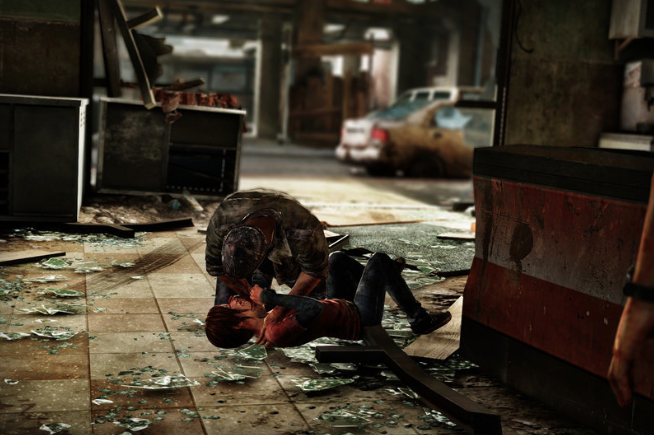
If anyone could capture the terror, desperation, and occasional joy of surviving the apocalypse, you’d think it might be award-winning war photographer Ashley Gilbertson — a man who spent years covering the Iraq invasion for The New York Times. This week, for Time magazine, Gilbertson “embedded” himself in (also award-winning) video game The Last of Us, using its built-in photo mode to capture shots of protagonists Joel and Ellie making their way across a dead but still hostile landscape. Gilbertson, who developed post-traumatic stress disorderduring the war, found the game too bloody, intense, and disconcerting to even play himself; he took the controls only to operate the camera.
But the photos? The photos, even at their most dramatic and well-shot, are bland.
Gilbertson hints at this in his piece on the series. With the option to replay a section or freeze the game, “it wasn’t hard to make images that recalled posters for a war film, or that might be used in an advertising campaign for the game itself,” he writes. And when he tried to echo famous war photographs, he found that he couldn’t get characters to react with any kind of emotional urgency. “In the end, their emotions mimicked that of the zombies they were killing.”
via The Verge
Image: Ashley Gilbertson / Time