

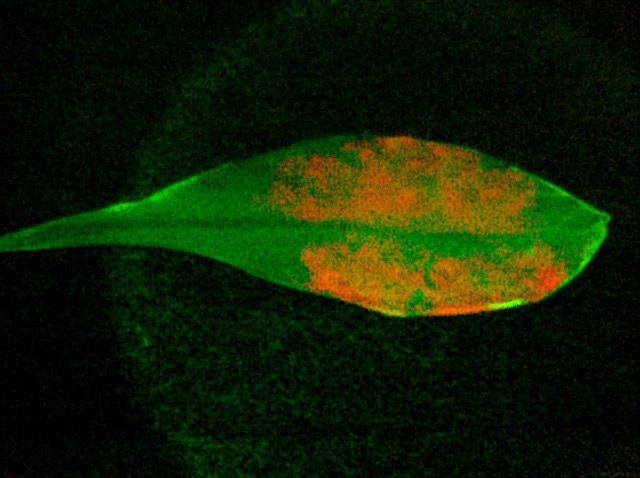
Harvesting sunlight is a trick plants mastered more than a billion years ago, using solar energy to feed themselves from the air and water around them in the process we know as photosynthesis.
Scientists have also figured out how to harness solar energy, using electricity from photovoltaic cells to yield hydrogen that can be later used in fuel cells. But hydrogen has failed to catch on as a practical fuel for cars or for power generation in a world designed around liquid fuels.
Now scientists from a team spanning Harvard University’s Faculty of Arts and Sciences, Harvard Medical School and the Wyss Institute for Biologically Inspired Engineering have created a system that uses bacteria to convert solar energy into a liquid fuel. Their work integrates an “artificial leaf,” which uses a catalyst to make sunlight split water into hydrogen and oxygen, with a bacterium engineered to convert carbon dioxide plus hydrogen into the liquid fuel isopropanol.
via Engineering.com







Hydrogen-brunching bacteria are upvoting Daniel Nocera’s catalyst! That’s y’ warm feeling for February after V-Day. G’wan, write the researchers and tell them it only works 60M years at a run before new organisms have to be developed. “That won’t scale….” Not so bad as a replacement schedule; how many packaging vendor busts would one have to run through in that time?