feature article archive
Subscribe Now

A Better Flytrap

That DDR memories work at all seems like a miracle. I mean, it’s like someone woke up one morning and said, “Hmmm…. You know, high-speed serial interconnect has complicated timing when you try to align a bunch of lanes… there HAS to be a way to take those concepts and make it even trickier to design.”

Here you’re taking a bank of memories and sending them data and address and clock and command and DQS signals, and all in “eye-diagram” territory. Skews and … Read More → "A Better Flytrap"


Energy: It’s Not Your Average Power

Energy. You read about it in the newspapers, hear about it from political pundits, and pay for it every month in gas, electric, and fuel bills. Airlines and automakers blame their financial woes on energy costs, and developing nations try to become energy-independent. There’s a lot of energy spent on, well, energy.

The same is true of electronic design. The energy consumption of a chip, system, or assembly is a big deal to many engineers. Handheld systems need to balance performance and features against current drain and battery life. At the opposite extreme, the designers … Read More → "Energy: It’s Not Your Average Power"

Disruptive Technology?

“Engineers don’t have time to have fun anymore. We plan to put some of that fun back into their working lives.” Richard Terrill, VP of Marketing at XMOS, sums up one aspect of the philosophy of the company. We talked about XMOS about a year ago and will do so again, because if the people there have got it right, small companies with big ideas will once again be able to create innovative products without incurring corresponding big costs. The driving force behind XMOS is aimed at overturning the current way in which systems are … Read More → "Disruptive Technology?"

Cooler, Lighter, Faster

We’ve all heard that time is money.  Also, given today’s energy market, we are painfully aware that power is money.  By the transitive property, we can therefore infer that power is time.  And, if we’re designing electronics for military and aerospace applications, it will come as no surprise that power is weight.  Why?  Because if your device consumes too much power, you have to start adding things like heat sinks and fans and bigger power supplies – all of which add weight and cost.  Adding fans also … Read More → "Cooler, Lighter, Faster"

When the Walls Get Too Thin

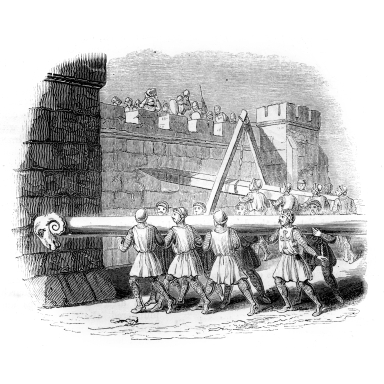
“But melord, the walls on the castle are thick, sir. There be but two ways to breach them, one being through the attaining of prodigious amounts of speed and energy and bounding therewith over the walls, and the other being the attaining of similar energies and smashing through. Both means may, my liege, be considered as unlikely as the migration of coconuts, for the walls be both high and strong. Verily, there may be one more purported way of breaching the wall, but only an the wall be thin enough, whereby one standing on the outside … Read More → "When the Walls Get Too Thin"

Does Harry Use Tools?

In England there is a phrase used to describe a significant sub-class of embedded engineers – “Fred in a shed.” It is the guy who works for himself and carries out contract work for a range of different people. I prefer to think of him as a sub-set of “Harry the Hairy Hacker.” You must all know him – even when he is in part of a multi-national company and not in a shed. He has war stories of how he single-handedly saved a project by coding in machine code for 48 hours without a break, and then, … Read More → "Does Harry Use Tools?"

The Big eASY

What’s bigger, faster, cheaper, and lower-power than the biggest, newest 65nm and 40nm FPGAs?   

ASICs, of course. 

OK, I can hear you already –  

“That’s not a fair comparison.”

“You need a team of 50 experts to design a high-end ASIC.”

“By the time you factor in NRE and mask costs, ASIC costs a lot more unless your volume is in the millions.”

“ASIC has very long design cycles.”

“ … Read More → "The Big eASY"

ESL Gets a New Taker

Electronic system level (ESL) design has struggled to convince doubters that it’s more than a marketing TLA. But the most visibly productive ESL tools in recent years have been those that synthesize C into lower-level RTL. Doing logic synthesis from C has been a long-time vision for raising the level of abstraction of design. But the history of the technology, which predates the ESL phenom, is checkered and has left a sour taste in many designers’ mouths. Each new offering has had to convince rather dubious prospects that they were different from what had … Read More → "ESL Gets a New Taker"

Let’s Abolish All Patents

“The first thing we do, let’s kill all the (patent) lawyers.” – William Shakespeare: Henry the Sixth, Part 2, Act IV, Scene II (sort of)

Where would our industry be without patents? Indeed, what kind of world would we live in if there were no patents or patent rights?

It would be a better place, that’s what.

It’s an idea worth exploring, if for no other reason than to inject some much-needed sanity into the current climate … Read More → "Let’s Abolish All Patents"

Complexitango

For years now, FPGA companies have been proclaiming that you can use their devices to create a “System on a Chip.”  We’ve seen “SoCs,” “Programmable System-on-Chip.” “SoPC,” “Platform FPGA,” and numerous other marketing-oriented, pseudo-jargonic phraseologies.

Supposing that’s true, and we want to put a “system” onto a chip.  What exactly is a “system”?

Wikipedia tells us a “system” is a “set of interacting or interdependent entities, real or abstract, forming an integrated … Read More → "Complexitango"

featured blogs
Jan 29, 2026
Most of the materials you read and see about gyroscopic precession explain WHAT happens, not WHY it happens....