


feature article archive
Subscribe Now

IP of Providence

The age of intelligent video is upon us.  We’ve all played with the new Kinect devices from Microsoft.  We’ve read about lane departure and collision avoidance systems being integrated into cars.  We’ve heard about technologies like facial recognition being used in security applications.  No longer are we content to stream “dumb” video from place to place.  While the master control room with giant arrays of video feeds may make a compelling image for science fiction, the reality will be more like a giant array of cameras – … Read More → "IP of Providence"

Put 1080p High-Definition Analytics into Your IP Camera

Advanced analytics is replacing simple motion detection in surveillance cameras. See how you can get 1080p high-definition (HD) analytics in your IP camera with a single-chip video analytics solution.

Watch this 8-minute video to:

Going to Extremes

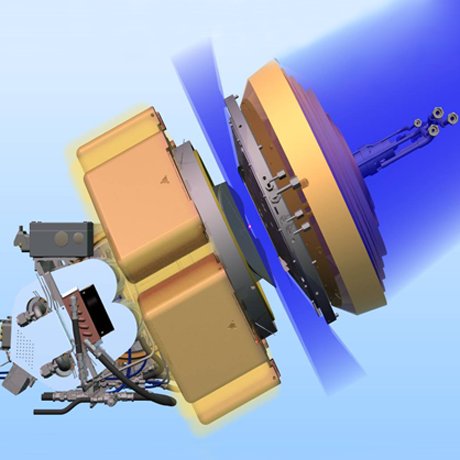
We looked at extreme ultraviolet (EUV) lithography a short while back, but I intentionally glossed over one important aspect: the source of the EUV energy. This is a topic worthy of attention on its own, as there have been years of research on this – and some recent developments that may take it in a new direction. And, I don’t know, it’s kinda cool.

EUV means high energy, so you’ve really got to rattle the crap out of … Read More → "Going to Extremes"

Attack of the Killer Dishwasher

Are you up on your IEC 60335 and IEC 60730 standards? No? Uh-oh. Better not be designing dishwashers, then.

Those standards are just two of the many that apply to so-called “white goods:” dishwashers, refrigerators, washers, dryers, and other major home appliances. The text of IEC 60335 runs 148 pages, and that’s just the English-language version. In all that verbiage it never uses the words “microcontroller” or “MCU,” yet it nevertheless applies to digital designers creating or programming the controls for these devices.

What’s a poor white goods developer … Read More → "Attack of the Killer Dishwasher"

Understanding the Impact of Single Event Effects in Avionics Applications

Various memory elements within electronic devices are suspectable to being upset when impacted by high-energy particles within the Earth’s atmosphere. In addition, other elements of a device may propagate induced pulses or transients that can result in errors in function. Given the high neutron flux found at commercial altitudes, avionics designers must consider the impact of SEUs.

Only one supplier of FPGAs offers devices with a base technology that is fundamentally immune to upset. Building on a 20-year history of … Read More → "Understanding the Impact of Single Event Effects in Avionics Applications"

Understanding Single Event Effects (SEEs) in FPGAs

With the increasing popularity of programmable logic, FPGAs are finding their way into many applications that were once the territory of ASICs and ASSPs. At the same time, process nodes are shrinking and logic density is increasing, meaning that more of the system can be implemented in a single device. As programmable logic finds its way into avionics, communications and medical applications, designers face demands for increased reliability and safety over many of the traditional markets for FPGAs. 

In these high-reliability markets,Read More → "Understanding Single Event Effects (SEEs) in FPGAs"

User-Customizable ARM-Based SoC FPGAs for Next-Generation Embedded Systems

Today’s embedded system developers face unprecedented challenges in their efforts to rapidly deliver competitive products to market. Until recently, most system implementation options have been limited to software-intensive, power-hungry multichip systems or costly SoC ASICs. However, market forces and resource constraints are compounding to make these approaches less viable for many design teams. For ARM-based embedded systems, though, advances in FPGA technology, intellectual property (IP), and design tools have witnessed the emergence of user-customizable SoC FPGAs. These devices not only overcome the shortcomings of traditional approaches, but offer unique and … Read More → "User-Customizable ARM-Based SoC FPGAs for Next-Generation Embedded Systems"

Jump-Start Software Development with the SoC FPGA Virtual Target

Want to get a head start on developing software for Altera® SoC FPGA applications? Virtual prototyping tools are now available for SoC FPGA devices, enabling you to work more productively, improve your software quality, and ultimately, get to market faster. The Altera SoC FPGA Virtual Target lets you begin your software development now.

Watch this 7-minute video to find out how the Virtual Target:

  • Read More → "Jump-Start Software Development with the SoC FPGA Virtual Target"

Introducing the User-Customizable ARM-Based SoC FPGA

Learn how to reduce system power, system cost, and board size while increasing performance and flexibility. Altera’s ARM-based SoC FPGAs combine the performance benefits and power and cost savings of hard logic, with the flexibility and time-to-market benefits of programmable logic – all in a single device.

Watch this 15-minute webcast and learn about:

featured blogs
Apr 24, 2026
A thought experiment in curiosity, confusion, and cosmic consequences....





