feature article archive
Subscribe Now

The First ICs on the Moon – The Apollo Guidance Computer, Part 1

In a speech made at Rice University on May 25, 1961, twenty days after Alan Shepard became the first American astronaut to fly into space in the Freedom 7 Mercury space capsule, U.S. President John F Kennedy said:

“Now it is time to take longer strides – time for a great new American enterprise – time for this nation to take a clearly leading role in space achievement, which in many ways may hold the key to our future on Earth… I believe that this nation should commit itself to achieving this goal, before this decade is … Read More → "The First ICs on the Moon – The Apollo Guidance Computer, Part 1"
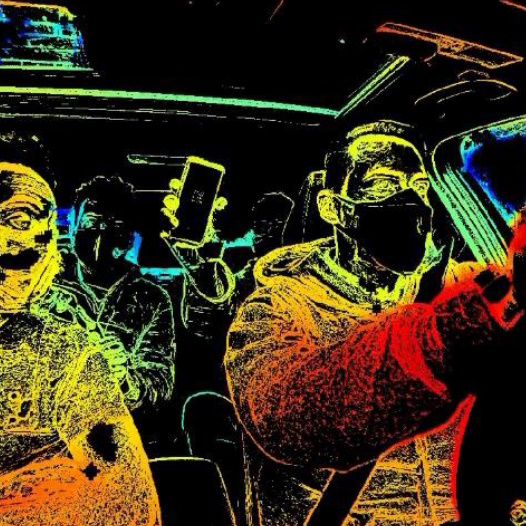
Capturing 3D Images from 2D CMOS Sensors (One Sensor, One Frame –> 3D Point Cloud)

A new sensor technology just popped up under my nose shouting “SURPRISE” (metaphorically speaking, of course). In this case, we’re talking about a technology that can take a traditional 2D CMOS camera sensor and use it to generate both 2D and 3D images. This was just when I thought I’d seen it all (no pun intended). Color me impressed!

“What is this incredible technology and who makes it?” I hear you cry. Don’t overexcite yourself. Settle down into your seat and I will reveal all. I was just chatting with … Read More → "Capturing 3D Images from 2D CMOS Sensors (One Sensor, One Frame –> 3D Point Cloud)"

A Last Embedded Dance with Jack Ganssle

I’ve known embedded system guru Jack Ganssle for four decades. He and I both started designing embedded systems in the 1970s, when the early 8-bit microprocessors and microcontrollers were so primitive that you could easily call some of them brain dead. In fact, that’s exactly the term Ganssle used to describe the Intel 8051 in a keynote speech given at the recent Embedded Online Conference, which Jack described as his last embedded speaking engagement. Today, embedded designers generally use vastly more powerful 32- and 64-bit processors from companies including AMD, Infineon, Intel, Microchip, NXP, Renesas, STMicroelectronics, … Read More → "A Last Embedded Dance with Jack Ganssle"

IBM Research Fellow Robert H. Dennard, 1932-2024: Inventor of the DRAM, Formulated MOS Scaling Law

Robert Dennard spent more than half a century working at one company: IBM. During his tenure at IBM, Dennard worked on a variety of advanced electronics projects; however, he’s best remembered for two major accomplishments: he invented the DRAM and was the first person to observe and formulate the advantageous scaling of speed and power consumption with size in MOS semiconductors, a phenomenon that lasted for more than three decades and became known as Dennard Scaling. Robert Dennard died on April 23, 2024, at the age of 91. … Read More → "IBM Research Fellow Robert H. Dennard, 1932-2024: Inventor of the DRAM, Formulated MOS Scaling Law"

Are Holographic Displays the Ultimate UI for AI?

1947 was an interesting year. Not that I was there myself, you understand, but I’ve heard stories. For example, 1947 was the year the Hungarian-British electrical engineer and physicist Dennis Gabor invented holography. 1947 was also the year William Shockley, John Bardeen, and Walter Brattain demonstrated the first transistor at Bell Labs. Also in 1947, Alan Turing gave what the Encyclopedia Britannica describes as “Quite possibly the earliest public lecture to mention computer intelligence.” Now, a mere 77 years later, these three fields are coming together in awesome ways.

I’ve said it before, and (doubtless) I’ … Read More → "Are Holographic Displays the Ultimate UI for AI?"

My AI Will Be Watching You (Part 2)

“Time is an illusion. Lunchtime doubly so,” as Ford Prefect said to Authur Dent in The Hitchhiker’s Guide to the Galaxy. I’d like to say I know what he meant, but it’s been a long time since I managed to make the time to have lunch (or breakfast, now I come to think about it).

As an aside, many fans of the books, television series, and film adaptation are unaware that The Hitchhiker’s Guide to the Galaxy began life as a 6-episode radio series, which … Read More → "My AI Will Be Watching You (Part 2)"

JPL Software Update Rescues Failing Voyager 1 Spacecraft

NASA’s Voyager 1 spacecraft exited the Solar System’s heliosphere and entered interstellar space on August 25, 2012, after a multi-decade journey. Four of the spacecraft’s ten instruments are still reporting measurements back to Earth. The remaining instruments have been shut down to conserve energy as the power output of the spacecraft’s plutonium-powered radioisotope thermoelectric generation (RTG) continues to drop. On November 14, 2023, the Voyager team at the Jet Propulsion Laboratory (JPL) in Pasadena noticed that the spacecraft was sending garbled science and engineering data, although it still responded to commands. The spacecraft is currently 22.5 light-hours (15 billion miles) … Read More → "JPL Software Update Rescues Failing Voyager 1 Spacecraft"

My AI Will Soon Be Watching You (Part 1)

Time is a funny old thing. On the one hand, we don’t even know what it is. On the other hand, we never seem to have enough of it. I remember being a kid with several days remaining until Christmas. The second hand on the clock seemed to barely move, desperately straining to make its way to the next mark on the clock-face. Each minute seemed to take an hour; each hour took at least a day; and each day was an eternity. Now, all I need to do is blink to see yet another Christmas … Read More → "My AI Will Soon Be Watching You (Part 1)"

Z80, Adieu

I’ve published several obituaries in EEJournal over the past few years, but this is my first such article for a microprocessor. After 48 years, Zilog has issued an end-of-life notice for the Z80 microprocessor, introduced in early 1976. I have a long history with the Z80 that stretches back all the way to that introduction year. I consider the Z80 to be the best 8-bit microprocessor ever designed, and I am sorry to see it fade into history, but all good things come to an end. Today, the Z80’s limited 64Kbyte address space and slow clock rate … Read More → "Z80, Adieu"

BYOD or BYOM to Synaptics’ AI-Native Edge Compute Party

I have two questions for you. First, what are the three key elements of any platform intended for the internet of things (IoT) and edge computing, both of which are where the internet “rubber” meets the real-world “road”? Second, what springs to your mind when you hear someone drop the company Synaptics into the conversation?

Let’s start with the second question first because… why not? It’s amazing to me that Synaptics was founded in 1986, which is 38 years ago as I … Read More → "BYOD or BYOM to Synaptics’ AI-Native Edge Compute Party"

featured blogs
Mar 20, 2026
From machines that see and think, to systems that act, and the humans that nudge them along....