Artificial satellites have been on my mind a lot recently. Actually, I’ve been cogitating and ruminating on all sorts of things that are whizzing around over our heads, including satellites, space telescopes, and space debris. But let’s kick off with satellites, which themselves pretty much kicked everything else off.
These include communications, navigation, weather, Earth observation, scientific, military, and reconnaissance satellites. In fact, there are tens of thousands of the little rascals (we’ll talk numbers later). This is all the more amazing to me when I consider that the very first satellite, Sputnik 1, was launched in 1957, which is the same year I decided to grace the planet with my presence.
Of course, Sputnik 1 didn’t do much apart from transmitting an annoying “beep… beep… beep” sound, with each pulse lasting ~0.3 seconds, followed by a pause. When I say “annoying,” it was “music to the ears” of the Russians, but it certainly annoyed the socks off the Americans, essentially kicking off the Space Race. Before Sputnik, space was mostly the domain of dreamers, science-fiction writers, and military planners. After Sputnik, it became a geopolitical battlefield.
Speaking of writers, as any science fiction buff knows, the person who is most commonly associated with the idea of geostationary communications satellites is Arthur C. Clarke. In 1945, long before the Space Age even began, Arthur wrote an article titled Extra-Terrestrial Relays for the British magazine Wireless World. In this article, he proposed placing three radio relay stations in orbit around Earth at an altitude of about 35,786 km (22,236 miles), where they would orbit once every 24 hours and thus appear stationary over the same point on the Earth.
In other words, Arthur essentially described what we now call geostationary communications satellites. That’s why a geostationary orbit is sometimes informally referred to as the “Clarke Orbit,” and the ring around Earth occupied by these satellites is occasionally called the “Clarke Belt.”
There were several in-between steps following Sputnik, such as SCORE (1958), Echo (1960), and Telstar (1962), all leading to the first successful geosynchronous communications satellites, Syncom 2 (1963) and Syncom 3 (1964), the latter of which famously relayed television coverage of the 1964 Tokyo Olympics to the United States.
Once the Syncom offerings provided proof of concept, the floodgates opened. The first commercial geostationary communications satellite, Intelsat 1 (nicknamed “Early Bird”), launched in 1965, providing international telephone calls, live global television, and intercontinental data links, all without the limitations associated with undersea cables. It’s amazing to think that it took less than seven years for humanity to progress from hearing Sputnik’s lonely electronic beeps to bouncing live television broadcasts across oceans through satellites hanging motionless above the Earth.
As an aside, and as his bibliography will affirm, Arthur was a prolific writer. A few of his works that stand out in my mind are Childhood’s End (1953), The City and the Stars (1956), A Fall of Moondust (1961), Rendezvous with Rama (1973), and Cradle (1988), which was co-written with Gentry Lee. Also, there were numerous short stories that had a huge impact on my young mind, including Expedition to Earth, The Nine Billion Names of God, and The Sentinel, the latter of which led to the development of the 1968 film 2001: A Space Odyssey and its corresponding novel.
As another aside, Arthur didn’t invent the idea of satellites, nor was he technically the first to discuss stationary orbital platforms. Earlier thinkers had explored related concepts. For example, the Russian rocket scientist Konstantin Eduardovich Tsiolkovsky discussed the idea of orbital stations in the early 1900s. Also, the Austro-Hungarian electrical engineer and astronautics theorist, Herman Potočnik (writing under the pseudonym Hermann Noordung), described geostationary-style orbital platforms in 1929, and wrote extensively about the concept of long-term human habitation of space.
On the other hand, it’s fair to say that Arthur presented a more fully thought-out realization. He wrote his geostationary satellite article in 1945, two years before the first working point-contact transistor was invented and more than a decade before the first satellite (i.e., Sputnik 1) was launched.
But we digress…
The geostationary communications satellites discussed above occupy Geostationary Earth Orbit (GEO), a special form of Geosynchronous Orbit (GSO), at an altitude of approximately 22,236 miles (35,786 km). Closest to Earth, we have Low Earth Orbit (LEO), which ranges from about 100 to 1,240 miles (160 km to 2,000 km). This is where the International Space Station (ISS) and many Earth-observation satellites reside. In between lies Medium Earth Orbit (MEO), best known as the home of Global Navigation Satellite Systems (GNSSs) such as the Global Positioning System (GPS).
LEO is also where today’s large satellite constellations are primarily deployed. These are groups of artificial satellites working together as coordinated systems rather than as isolated spacecraft. By utilizing multiple satellites in complementary orbits, they can provide continuous, high-speed communications, navigation, or imaging services across much or all of the globe. Perhaps the best-known current example is Starlink.
According to sources such as the European Space Agency (ESA), at the time of this writing, there are currently around 14,000 to 15,500 active satellites orbiting the Earth. Roughly 10,000 of these are Starlink’s alone, which gives us food for thought. Why are we so vague as to the actual number? Well, things aren’t helped by the fact that the number changes constantly, and different organizations define “active satellite” differently.
Several things contribute to the fuzzy numbers: new satellites are launched every week, old satellites are deorbited, some satellites partially fail, some are temporarily inactive, military spacecraft may be classified, and different tracking databases use different criteria. For example, one organization may count a satellite that still responds to commands but no longer performs its mission as “active,” while another may classify it as “inactive.”
And we’re only seeing the “tip of the iceberg” because there’s so much more coming our way. SpaceX ultimately plans to have 42,000+ satellites active at any given time. Amazon is working on its own constellation (originally called Project Kuiper, rebranded as Amazon Leo in 2025), with a few hundred satellites already in orbit, and thousands more planned. Meanwhile, the Europeans are working on their own interpretations (plural), and China has two emerging constellations: Guowang, with ~13,000 planned satellites, and Qianfan, with ~15,000.
Whichever way you look at these satellites (figuratively speaking), that’s a lot of satellites. Ask the astronomers, who are tired of looking at them (literally speaking), as we read in the Astronomers are Losing the Night Sky (and Radio Sky) to Satellite Megaconstellations column on the Universe Today website.
All I know is that there seemed to be a lot more stars in the sky when I was a kid. After our scout troop meetings, my friend Jeremy and I would ride our bikes home. On the way, we’d pool our limited resources to purchase a bag of chips (French Fries) from the fish-and-chip shop at the bottom of our road. Then we’d climb up on his parents’ garage roof (it was flat) and feast our eyes on the night sky while feasting our mouths with piping hot chips. We’d also discuss all sorts of important things, like whether there were alien boy scouts on distant worlds looking back at us (we wondered how many arms and legs they’d have and what their uniforms would look like).
The reason I mention this here is that I worry that future generations may never experience the sort of dark, star-filled skies Jeremy and I took for granted. Could it be that a time will come when kids looking up at the night sky will spend more time counting satellites than stars?
I’m still musing on things, such as the fact that satellites don’t politely disappear when they reach the end of their operational lives. Most are deliberately deorbited, causing them to burn up in the atmosphere like artificial meteors. The problem is that all that material has to go somewhere. Scientists are increasingly concerned that vaporized metals and other pollutants released during launches and reentries could accumulate in the upper atmosphere, potentially interfering with ozone recovery and atmospheric chemistry.
And don’t even get me started on space debris. Dang! Too late! I just started! Space agencies currently track dead satellites, spent rocket stages, collision fragments, anti-satellite weapon debris, and other miscellaneous junk. The number of tracked objects larger than about 10 cm is now above 30,000, while the estimated number of smaller debris fragments runs into the millions.
Yes, I did include “anti-satellite weapon debris” in the list. I can barely believe that our species is so stupid. Several nations have conducted anti-satellite (ASAT) tests that have created orbital debris, and these events are now widely regarded as among the most dangerous pollution incidents in near-Earth space. The major publicly known examples were the works of the Soviet Union/Russia, the United States, China, and India. Perhaps the most notorious modern example was China’s 2007 ASAT test, which created an enormous amount of long-lived, high-velocity orbital debris in one of the busiest regions of space.
But none of the above is what I wanted to talk about…
I recently had a very interesting chat with Euwyn Poon about his recently founded company, Orbital, and his plans to place AI inference data centers in space.
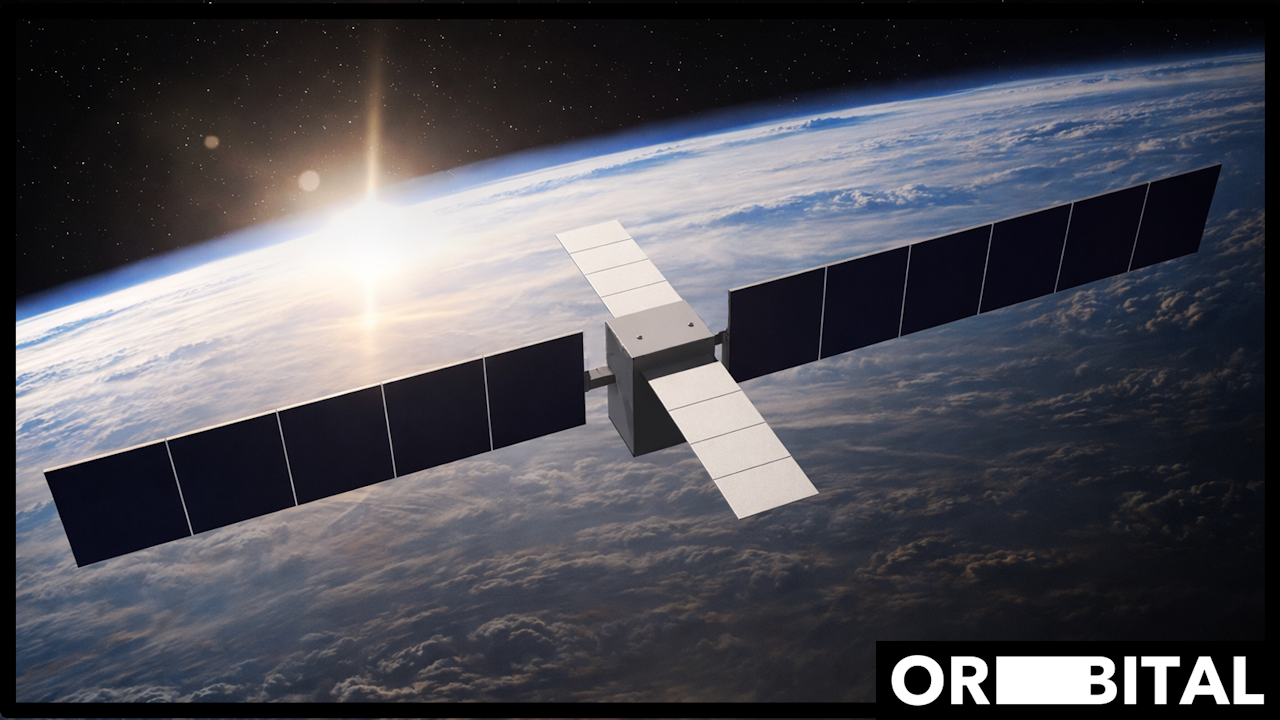
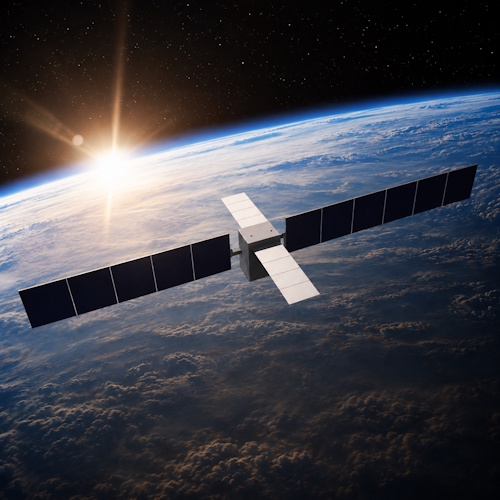
Rendered image of an AI inference data center satellite (Source: Orbital)
If this were anyone else, I’d take the whole idea with a grain of salt, but Euwyn does have a track record as a successful entrepreneur. As it was, I’m afraid, I did play the role of the skeptical engineer, asking pointed questions about cooling, power, launch costs, orbital mechanics, debris, servicing, pollution, radiation, economics, networking, latency, and manufacturability, to name but a few. After talking to Euwyn, however, I must admit to coming away muttering, “Maybe… just maybe…” In a crunchy nutshell, Euwyn’s arguments can be summarized as follows.
First, he says that when they hear phrases like “AI data center in space,” most people instinctively think about gigantic terrestrial AI training clusters (that was certainly my dear old mum’s knee-jerk reaction). In reality, however, Orbital isn’t targeting AI training workloads at all. Instead, the company is focusing on AI inference, which is a completely different kettle of fish and a horse of a different color (I never metaphor I didn’t like). Yes, I know “horse of a different color” should be classified as a figurative idiom, while “kettle of fish” is an idiomatic metaphor, but I dare to be different. Moving on… training large language models requires thousands of tightly coupled processors connected by ultra-high-speed interconnects. By comparison, inference workloads are naturally distributed and massively parallel. A single inference request can often be handled by a relatively small compute node, making the problem much more amenable to deployment across large constellations of smaller satellites.
Second, Euwyn argues that orbital AI infrastructure begins to make a surprising amount of sense when viewed as an energy-conversion problem. In his vision, satellites in low Earth orbit continuously harvest solar energy and convert that energy directly into AI-generated data. Electrical power itself is difficult to beam back to Earth economically, but digital information is comparatively easy to transmit. From this perspective, orbital AI systems start to resemble distributed solar-powered compute farms floating above the planet.
Third, he points out that many of the underlying engineering challenges are already being solved by existing satellite constellations. Optical inter-satellite links, high-speed ground stations, autonomous orbital coordination, and large-scale constellation management are all rapidly maturing technologies. In fact, Euwyn repeatedly stressed that Orbital’s proposed infrastructure may ultimately look more like Starlink than like a traditional terrestrial data center. Instead of constructing giant “Death Star”-style orbital facilities, the concept centers on deploying large numbers of relatively compact inference satellites operating cooperatively as a distributed compute fabric.
Finally, and perhaps most importantly, Euwyn believes the real challenge isn’t physics so much as economics and manufacturing scale. Cooling, radiation hardening, orbital station-keeping, and networking are all difficult engineering problems, but none appear fundamentally impossible. The real question is whether launch costs can be reduced sufficiently, and whether the industry can manufacture and deploy these systems economically at scale. If launch costs continue to fall and AI inference demand continues its explosive growth, then the idea of orbital AI infrastructure may not be quite as crazy as it first sounds.
At the end of the day, I’m not entirely convinced we’ll soon see tens of thousands of AI inference satellites silently humming away above our heads. On the other hand, I’m also no longer convinced we won’t (I used to be indecisive, but now I’m not so sure). All I know is that the world is an interesting place, and it’s getting more interesting by the day. What say you? Do you find the thought of AI data centers in space to be brilliantly visionary or completely bonkers?