

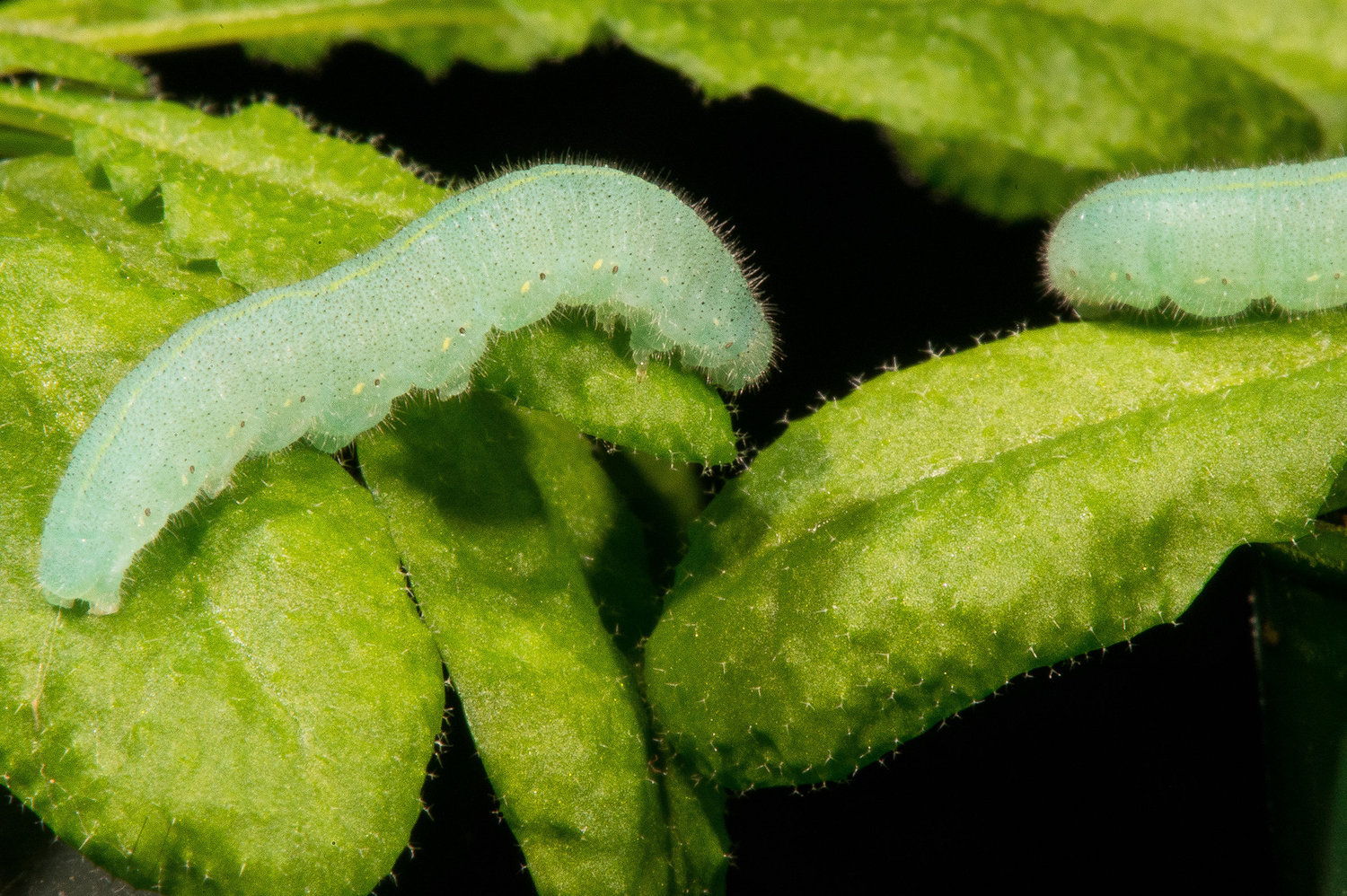
It happened through what’s called an evolutionary arms race, explains Chris Pires, a plant evolutionary biologist at the University of Missouri and one of the lead authors of the study. This works a lot like a military arms race — repeated escalations to have better weapons or defenses — but on an epic timescale. In this case, the opposing armies are caterpillars of the cabbage butterfly and plants in the order Brassicales, which today includes cabbage, horseradish, kale and mustard.
So here’s what happened: Some 90 million years ago, Pires explains, the ancestors of these vegetables evolved defenses to protect themselves from being eaten by insects: They started making chemicals called glucosinolates. “Most bugs don’t like it. It’s toxic,” Pires says. “It turns their guts inside out.”
Glucosinolates are a major component of mustard oil, so for simplicity’s sake, let’s call the defense, as Pires does, “a mustard oil bomb.”
via NPR
Image: Roger Meissen/Bond LSC






