

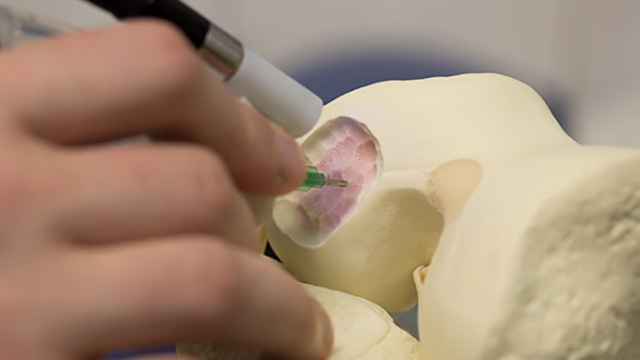
The BioPen, developed at Australia’s University of Wollongong, holds two different “inks:” one made of human cells, the other a protective, UV-activated structural gel. The pen layers the cells inside the protective gel, which hardens under the device’s built-in UV light. Instead of the current weeks-long process of harvesting and growing replacement cartilage tissue, the compact, handheld device could enable doctors to “draw” functional material directly on to a damaged bone.
The benefit, as with most 3D-printed organs and body parts, is total customization. Instead of mass-produced orthopedic implants, which don’t work exactly like human tissue, a matrix of human cells printed directly onto an injured bone would create actual, functional cartilage.
via Gizmodo






