

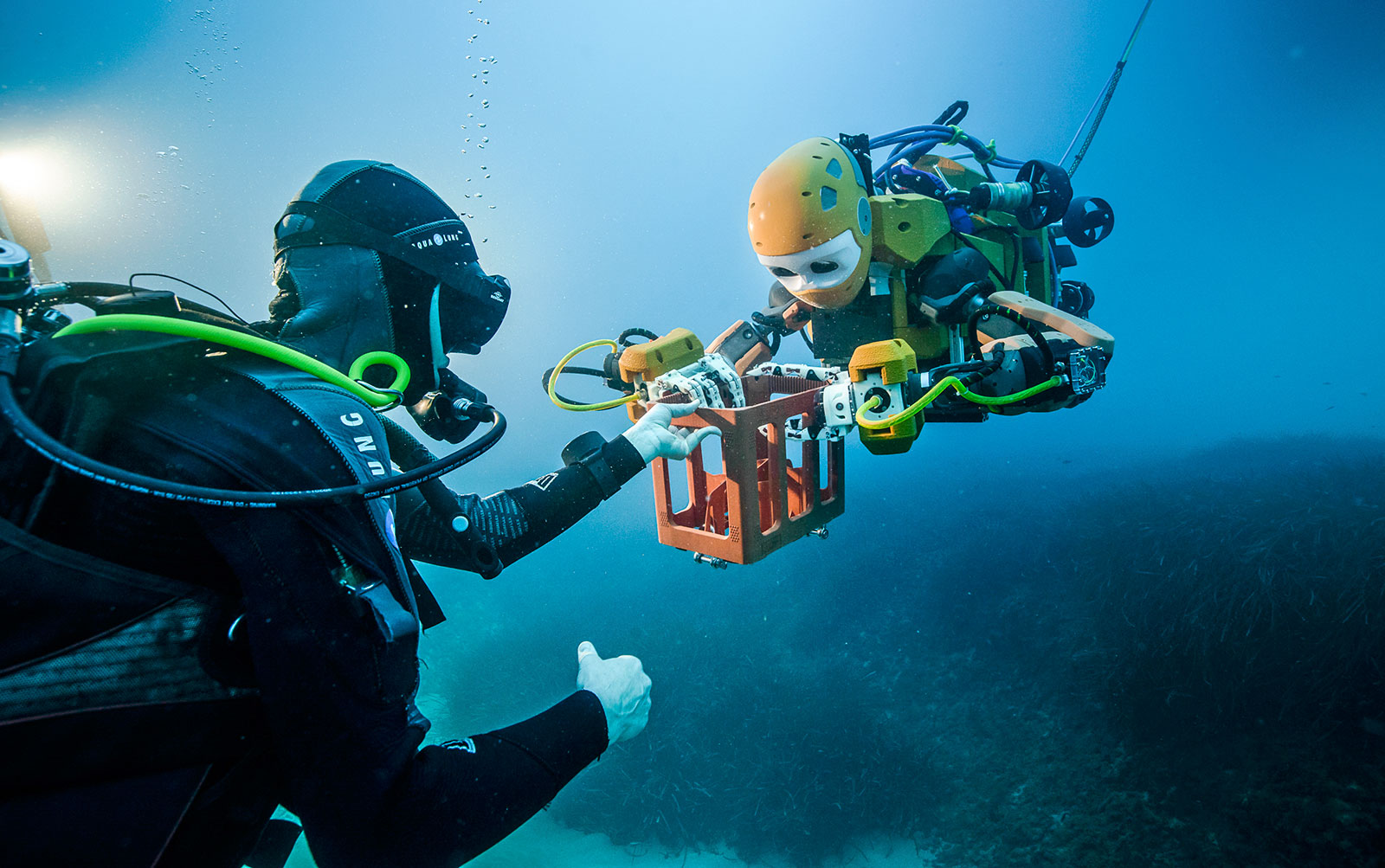
A group of underwater archaeologists exploring the sunken remains of King Louis XIV’s flagship La Lune added a very special member to their dive team recently. OceanOne, a Stanford-developed humanoid diving robot with “human vision, haptic force feedback and an artificial brain,” made its maiden voyage alongside human divers to recover 17th-century treasures from bottom of the Mediterranean.
Stanford’s five-foot “virtual diver” was originally built for studying coral reefs in the Red Sea where a delicate touch is necessary, but the depths go well beyond the range of meat-based divers. The “tail” section contains the merbot’s onboard batteries, computers and array of eight thrusters, but it is the front half that looks distinctly humanoid with two eyes for stereoscopic vision and two nimble, articulated arms.
via Engadget






