

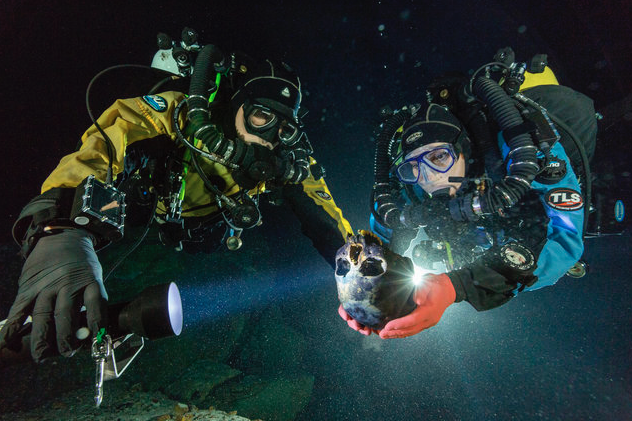
Around 12,000 years ago, a short teenage girl was wandering a system of caves, likely searching out water, when she fell into a deep pit and cracked her pelvis. She likely died almost instantly, and her body remained there untouched until researchers discovered it in 2007, submerged under water that had filled the cave when glaciers began melting 2,000 or so years after her death. Those researchers have been studying her remains in the years since, and now her skeleton is helping to settle a big debate: the question of where the earliest Americans actually came from.
he going theory is that the first Americans, known as Paleoamericans, came from Beringia — a northern area that includes the land bridge once connecting Russia and Alaska. But skeletons found throughout the Americas have posed a problem: these early Americans don’t resemble modern Native Americans, nor the Siberians from which they’re believed to have descended. That’s left open the possibility that a second migration of humans from some other region also populated the Americas. “Were they separate immigrations,” asks research leader James Chatters, “or was evolution the issue?”
This new skeleton, said to be one of the six oldest ever found in the Americas, serves as some of the best evidence yet toward confirming the latter: that the first Americans did in fact come from Beringia and later evolved features distinct from modern Native Americans.
via The Verge
Image: Paul Nicklen/National Geographic






