

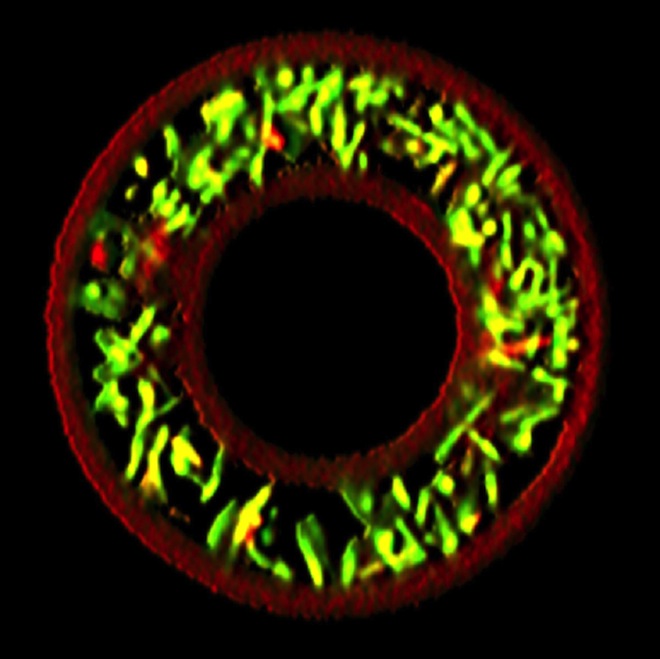
Scientists at The University of Texas at Austin have figured out how to make structures – like houses or cages – that are small enough to corral bacterial cells. The enclosures can be built in any shape and are 3-D printed using a modified laser, the team reported Oct. 7 in Proceedings of the National Academy of Sciences.
But instead of facilitating microbial cage-fighting matches, the microscopic structures should help scientists learn how infections spread and how bacteria talk with one another – a complex process involved in everything from population regulation to toxin release to the development of drug resistance.
via Wired
Image: Jodi Connell/UT Austin






