

fresh bytes
Subscribe Now

Science says Jupiter has the best french fries

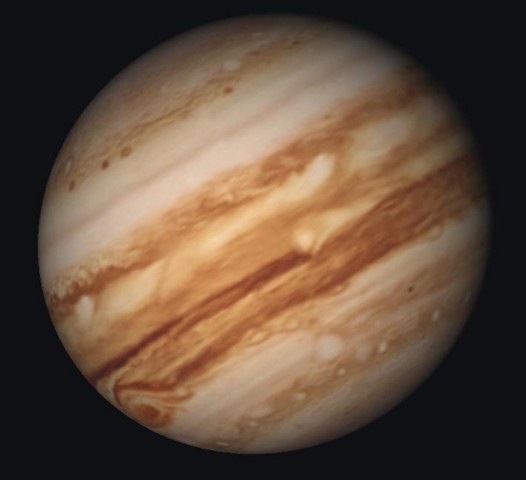
jupiter.jpg

Yes, a group of real scientists published a real paper in the journal Food Research International about the optimal conditions for cooking french fries. It has lots of sciencey terms like “crust thickness evolution” and “heat transfer from hot oil to potato surface.” For reference, those are the kinds of factors you should be considering while spinning cooking french fries at varying levels of g-force in a centrifuge for the betterment of human kind.

John Lioumbas and Thodoris Karapantsios of Aristotle University of Thessaloniki, Greece, found that, in a range of 1.8 to 9 times Earth’s gravity, french fries cooked best at around 3G, which is roughly the same as Jupiter’s “surface” gravity.
via Geekosystem

Continue reading 

Image: tonynetone

Leave a Reply

featured blogs
Feb 18, 2026
Because sometimes the best replacement part'¦ is the one you already have!...

featured video

Cadence Chiplets Solutions | Helping you realize your chiplet ambitions

Sponsored by Cadence Design Systems

In this webinar, David Glasco, VP of Compute Solutions at Cadence, discusses how Cadence enables customers to transition from traditional monolithic SoC architectures to modular, scalable chiplet-based solutions, essential for meeting the growing demands of physical AI applications and high-performance computing.

Read eBook: Helping You Realize Your Chiplet Ambitions

featured chalk talk

BMV080: World’s Smallest Particulate Matter (PM) Sensor
In this episode of Chalk Talk, Liaisan Khismatova from Bosch Sensortec and I explore the benefits of the Bosch BMV080, the world’s smallest particulate matter (PM) sensor. They also investigate the fanless innovation at the heart of the BMV080 Particulate Matter Sensor and how the silent and maintenance-free operation and ultra-compact size of this sensor makes it a game changer for next generation air quality monitoring applications. 
Jan 29, 2026
30,373 views





