

When kids eat glue, they’re exhibiting a lack of common sense. Computers equipped with artificial intelligence, it turns out, suffer from a similar problem.
While computers can tell you the chemical composition of glue, most can’t tell you if it is a gross choice for a snack. They lack the common sense that is ingrained in adult humans.
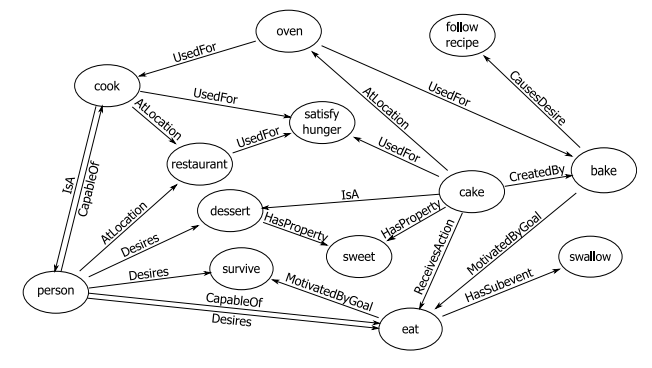
For the last decade, MIT researchers have been building a system called ConceptNet that can equip computers with common-sense associations. It can process that a person may desire a dessert such as cake, which has the quality of being sweet. The system is structured as a graph, with connections between related concepts and terms.
The University of Illinois-Chicago announced today that its researchers put ConceptNet to the test with an IQ assessment developed for young children. ConceptNet 4, the second-most recent iteration from MIT, earned a score equivalent to the average 4-year-old. It did well at vocabulary and recognizing similarities, but did poorly at answering “why” questions. Children would normally get similar scores in each of the categories.
via GigaOM






