

fresh bytes
Subscribe Now

NASA using 3D laser printing to create complex rocket parts

mr-cusing-0.jpeg

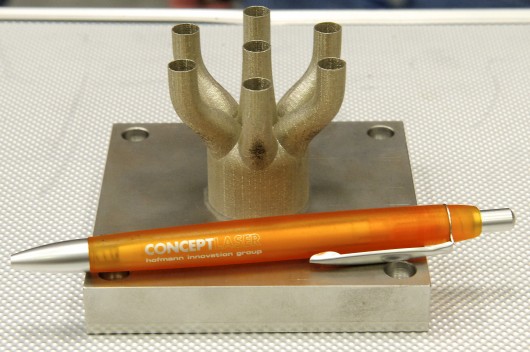
NASA engineers are using a 3D laser printing system to produce intricate metal parts such as rocket engine components for its next-generation Space Launch System (SLS). The method called “selective laser melting “ (SLM) promises to streamline fabrication and significantly reduce production costs.

Rocket engines are as complex as precision watches, but watches don’t have to deal with highly corrosive or cryogenic liquids, gases hot enough to melt steel, or destructive stresses and vibrations. Rocket engines have to do all this the first time they’re used and they have to fit a great deal of gear into a very cramped space. Fabricating the parts for these engines is an exacting, time consuming and expensive task. Since many of their components are very intricate, making them is just the sort of job for 3D printers.
via gizmag

Continue reading

Image: The first test piece produced on the M2 Cusing Machine (Image: NASA/MSFC/Andy Hardin)

Leave a Reply

featured blogs
Feb 24, 2026
How a perfectly good Bosch HVAC system was undermined by preventable mistakes, and a thermostat interface that defies logic....

featured video

Cadence Chiplets Solutions | Helping you realize your chiplet ambitions

Sponsored by Cadence Design Systems

In this webinar, David Glasco, VP of Compute Solutions at Cadence, discusses how Cadence enables customers to transition from traditional monolithic SoC architectures to modular, scalable chiplet-based solutions, essential for meeting the growing demands of physical AI applications and high-performance computing.

Read eBook: Helping You Realize Your Chiplet Ambitions

featured chalk talk

BMV080: World’s Smallest Particulate Matter (PM) Sensor
In this episode of Chalk Talk, Liaisan Khismatova from Bosch Sensortec and I explore the benefits of the Bosch BMV080, the world’s smallest particulate matter (PM) sensor. They also investigate the fanless innovation at the heart of the BMV080 Particulate Matter Sensor and how the silent and maintenance-free operation and ultra-compact size of this sensor makes it a game changer for next generation air quality monitoring applications. 
Jan 29, 2026
32,623 views




