

Thermoelectric materials work by converting differences in temperature into electric voltage. If two parts of such a material experience significantly different temperatures, electrons within it will flow from the warmer part to the cooler, creating an electrical current in the process. Using these materials, electricity could be generated by the temperature differences on the inside and outside of jackets,within car engines, or even between the human body and the air around it … just to list a few examples. An international team of scientists have now discovered that an existing material, which behaves like a liquid but isn’t one, displays particularly impressive thermoelectric properties.
The material is actually a solid, consisting of copper and selenium. The selenium takes the form of a rigid crystalline lattice, which the copper atoms easily flow through – it’s described as being similar in principle to a wet sponge, with the copper playing the part of the water.
via gizmag
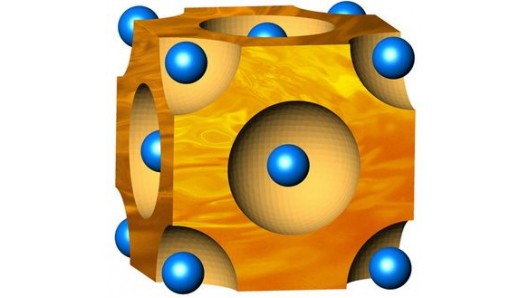
In this diagram, the blue spheres represent selenium atoms forming a crystal lattice, while the orange regions represent the copper atoms that flow through the crystal structure like a liquid
(Image: Caltech/Jeff Snyder/Lance Hayashida)






