

fresh bytes
Subscribe Now

Hubble images become tactile 3D experience for the blind

hubble-blind-0.jpg

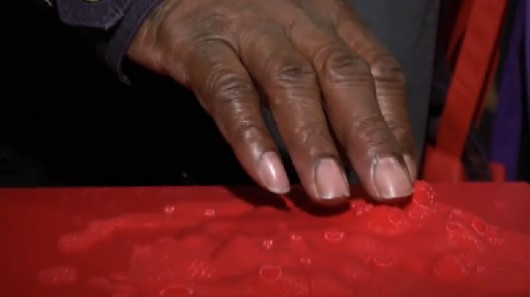
Scientists have used 3D printing technology to transform images taken from the Hubble Space Telescope into tactile “pictures” for the blind. Astronomers Carol Christian and Antonella Nota of the Space Telescope Science Institute are experimenting with 3D models as a means of aiding education for people who cannot study visual images. 

Christian and Nota are working with a team of experts in software design and in developing programs for people with visual impairments. Custom software has been developed to calculate and translate measurements such as size, brightness and distance from the Hubble images into 3D-printable designs.
via Gizmag


Continue reading 

Leave a Reply

featured blogs
Feb 18, 2026
Because sometimes the best replacement part'¦ is the one you already have!...

featured video

Cadence Chiplets Solutions | Helping you realize your chiplet ambitions

Sponsored by Cadence Design Systems

In this webinar, David Glasco, VP of Compute Solutions at Cadence, discusses how Cadence enables customers to transition from traditional monolithic SoC architectures to modular, scalable chiplet-based solutions, essential for meeting the growing demands of physical AI applications and high-performance computing.

Read eBook: Helping You Realize Your Chiplet Ambitions

featured chalk talk

BMV080: World’s Smallest Particulate Matter (PM) Sensor
In this episode of Chalk Talk, Liaisan Khismatova from Bosch Sensortec and I explore the benefits of the Bosch BMV080, the world’s smallest particulate matter (PM) sensor. They also investigate the fanless innovation at the heart of the BMV080 Particulate Matter Sensor and how the silent and maintenance-free operation and ultra-compact size of this sensor makes it a game changer for next generation air quality monitoring applications. 
Jan 29, 2026
30,373 views



