

fresh bytes
Subscribe Now

How Ross Perot saved the world’s first electronic computer

computer.jpg

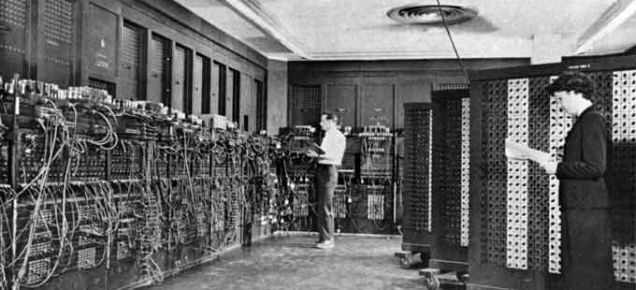
Ross Perot is a collector. He once bought a copy of the Magna Carta in 1984. But more intriguingly, he also bought and resurrected ENIAC, the world’s first electronic computer.

ENIAC stands for the “Electronic Numerical Integrator And Computer” and was conceived of during World War II as a way for artillerymen to calculate the trajectory of bullets. It is an absolutely massive machine weighing in at 27 tons and occupying 1,800 square feet when fully assembled. Construction began in 1943, but by the time it was finished in 1945, the war was over. The Army kept a tight lid on things at first. Even the maintenance manual (below) remained classified until 1946. So what did the United States Army do with this marvel of technology? They used it to design the first hydrogen bomb. Then, in 1955, they threw the thing away.
via Gizmodo


Continue reading 

Leave a Reply

featured blogs
Dec 22, 2025
Here's a seasonal sampler of intriguing videos, curious technologies, surprising history, and random delights collected during a rare pause for breath....

featured video

Revolutionizing AI Chip Development: Synopsys Solutions for the Future

Sponsored by Synopsys

In the AI era, demand for advanced chips is soaring, creating scaling and power challenges. Discover how Synopsys accelerates AI chip development with innovative solutions, robust partnerships, and cutting-edge silicon IP for first-pass silicon success.

Click here for more information

featured news

Microchip Unveils First 3 nm PCIe® Gen 6 Switch to Power Modern AI Infrastructure

Sponsored by Microchip

AI systems are starving for bandwidth. Microchip’s 3 nm Switchtec™ Gen 6 PCIe® switches deliver up to 160 lanes, lower power, and CNSA-compliant security—built for the future of AI and cloud infrastructure.

Click here to read more

featured chalk talk

Data Center Solutions
Sponsored by Mouser Electronics and Microchip
In this episode of Chalk Talk, Josue Navarro from Microchip Technologies and Amelia Dalton investigate the biggest challenges of AI servers and the benefits that power modules can bring to these types of designs. They also explore the roles that energy efficiency, power density, thermal management, and security play in the AI server applications and how you can take advantage of Microchip solutions for your next AI server design.
Dec 8, 2025
31,981 views



