

fresh bytes
Subscribe Now

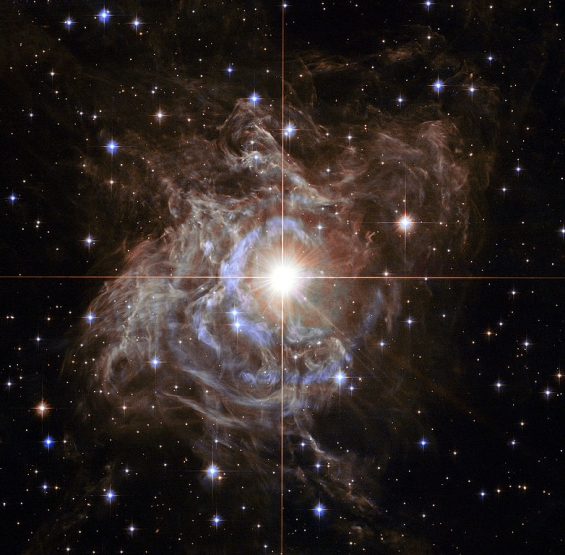
How do we measure distances to other stars?

stars.jpg

Earlier this month, astronomers were excited to discover three supernovas in far-off galaxy, with a huge galaxy cluster sandwiched between us and them. The galaxies’ enormous gravity magnified the light of the exploding stars, an effect called gravitational lensing.

Since these were a particular type of exploding star, they can be used as cosmic yardsticks. That means astronomers were able to check the prescription, as it were, of the gravitational lenses. This is important for measuring the structure of the Universe (including dark matter), and for making sure astronomers’ measuring tools are calibrated correctly.
via DVICE

Continue reading 

Image: Wikipedia

Leave a Reply

featured blogs
Feb 6, 2026
In which we meet a super-sized Arduino Uno that is making me drool with desire....

featured chalk talk

Democratizing Centimeter Level GNSS Precision for All Applications
Sponsored by Mouser Electronics and u-blox
In this episode of Chalk Talk, Arnaud Le Lannic from u-blox and Amelia Dalton explore the benefits of the ZED-X20P, all-band high precision GNSS module and the ZED-F20P triple-band high precision GNSS module from u-blox. They also investigate the roles that correction source and centimeter-level positioning services play in these types of designs, and how you can improve your next design with high precision position solutions from u-blox.
Jan 28, 2026
23,533 views





