

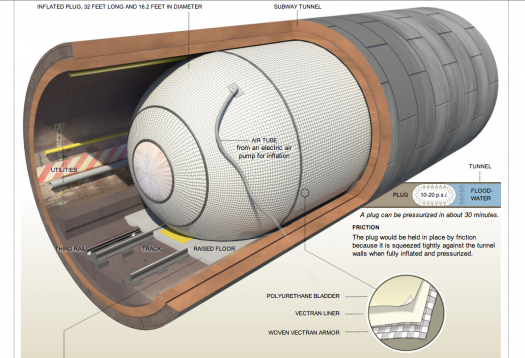
With a few dull thuds, the one-ton bag of high-strength fabric tumbled from the wall of the mock subway tunnel and onto the floor. Then it began to grow.
Hurricane Sandy brought 13-foot storm surge into the New York City’s subway tunnels.
As air flowed into it through a hose, the bundle inflated until it was crammed tight inside the 16-foot-diameter tunnel, looking like the filling in a giant concrete-and-steel cannoli.
The three-minute procedure, conducted on a chilly morning this month in an airport hangar not far from West Virginia University, was the latest test of a device that may someday help guard real tunnels during disasters — whether a terrorist strike or a storm like Hurricane Sandy, whose wind-driven surge of water overwhelmed New York City’s subway system, shutting it down for days.
“The goal is to provide flooding protection for transportation tunnels,” said John Fortune, who is managing the project for the federal Department of Homeland Security’s Science and Technology Directorate.
via New York Times






