

fresh bytes
Subscribe Now

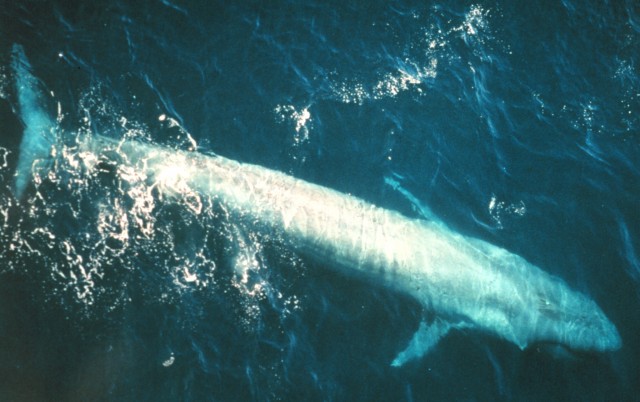
Giant gobs of earwax tell a whale of a tale

bluewhale3_noaa-640x402.jpg

Throughout their lives, baleen whales develop wax in their ears, just like humans do. Every six months, a new layer, or “lamina,” is deposited. The laminae have regular color differences due to annual feeding and migration patterns, allowing researchers to distinguish each and every six-month period in the whales’ lives. Since whales don’t clean their ears like we do, their entire history is recorded in the wax plug by the time they die. These earplugs have long been used by scientists to figure out the age of whales, but it turns out the wax can tell us much more about whales’ lives than just how old they are.
via Ars Technica

Continue reading

Image: NOAA
 

Leave a Reply

featured blogs
Feb 24, 2026
How a perfectly good Bosch HVAC system was undermined by preventable mistakes, and a thermostat interface that defies logic....

featured video

Cadence Chiplets Solutions | Helping you realize your chiplet ambitions

Sponsored by Cadence Design Systems

In this webinar, David Glasco, VP of Compute Solutions at Cadence, discusses how Cadence enables customers to transition from traditional monolithic SoC architectures to modular, scalable chiplet-based solutions, essential for meeting the growing demands of physical AI applications and high-performance computing.

Read eBook: Helping You Realize Your Chiplet Ambitions

featured chalk talk

Democratizing Centimeter Level GNSS Precision for All Applications
Sponsored by Mouser Electronics and u-blox
In this episode of Chalk Talk, Arnaud Le Lannic from u-blox and Amelia Dalton explore the benefits of the ZED-X20P, all-band high precision GNSS module and the ZED-F20P triple-band high precision GNSS module from u-blox. They also investigate the roles that correction source and centimeter-level positioning services play in these types of designs, and how you can improve your next design with high precision position solutions from u-blox.
Jan 28, 2026
33,365 views





