

fresh bytes
Subscribe Now

Earth-sized radio telescope to take first pic of black hole

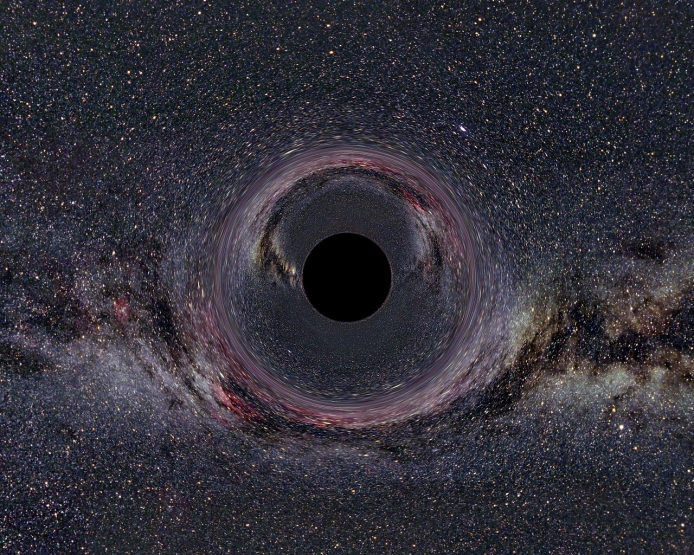
Black_Hole_Milkyway.jpg

Black holes, being black holes, aren’t the easiest things to take pictures of. Not only are they black (absorbing nearly all the light that falls on them) , they also tend to be small, far away, and surrounded by things that are very very bright. The only way we’re going to get a good look at one from here is to use as large and sensitive a radio telescope as we possibly can, and the largest radio telescope you can possibly build on Earth is, well, a radio telescope the size of Earth itself.

This sounds a little nuts, but astronomers want to build a virtual Earth-sized radio telescope by linking together a bunch of different radio telescopes all over the world. They’re not going to try to fill in all the gaps (which ould involve covering most of the planet with antennas), but they don’t have to: thanks to a technique called Very Long Baseline Interferometry, an array of widely separated telescopes that are carefully synchronized can emulate (in some respects) one single telescope the size of the maximum distance between the farthest apart telescopes in the array.
via DVICE

Continue reading 

Image credit: Wikipedia

Leave a Reply

featured blogs
Feb 24, 2026
How a perfectly good Bosch HVAC system was undermined by preventable mistakes, and a thermostat interface that defies logic....

featured video

Cadence Chiplets Solutions | Helping you realize your chiplet ambitions

Sponsored by Cadence Design Systems

In this webinar, David Glasco, VP of Compute Solutions at Cadence, discusses how Cadence enables customers to transition from traditional monolithic SoC architectures to modular, scalable chiplet-based solutions, essential for meeting the growing demands of physical AI applications and high-performance computing.

Read eBook: Helping You Realize Your Chiplet Ambitions

featured chalk talk

Democratizing Centimeter Level GNSS Precision for All Applications
Sponsored by Mouser Electronics and u-blox
In this episode of Chalk Talk, Arnaud Le Lannic from u-blox and Amelia Dalton explore the benefits of the ZED-X20P, all-band high precision GNSS module and the ZED-F20P triple-band high precision GNSS module from u-blox. They also investigate the roles that correction source and centimeter-level positioning services play in these types of designs, and how you can improve your next design with high precision position solutions from u-blox.
Jan 28, 2026
33,992 views





