

fresh bytes
Subscribe Now

Ear-powered medical devices in development

earpower.jpeg

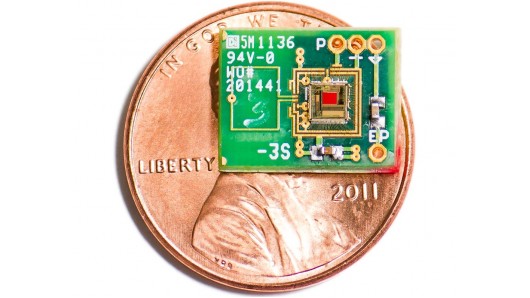
Our ears work by converting the vibrations of the eardrum into electrochemical signals that can be interpreted by the brain. The current forthose signals is supplied by an ion-filled chamber deep within the inner ear – it’s essentially a natural battery. Scientists are now looking at using that battery to power devices that could be implanted in the ear, without affecting the recipient’s hearing.

The “battery chamber” is located in the cochlea. It is internally divided by a membrane, some of the cells of which are designed to pump ions. The arrangement of those specialized cells, combined with an imbalance of potassium and sodium ions on opposite sides of the membrane, are what creates the electrical voltage.
via gizmag


Continue reading 

Leave a Reply

featured blogs
Feb 24, 2026
How a perfectly good Bosch HVAC system was undermined by preventable mistakes, and a thermostat interface that defies logic....

featured video

Cadence Chiplets Solutions | Helping you realize your chiplet ambitions

Sponsored by Cadence Design Systems

In this webinar, David Glasco, VP of Compute Solutions at Cadence, discusses how Cadence enables customers to transition from traditional monolithic SoC architectures to modular, scalable chiplet-based solutions, essential for meeting the growing demands of physical AI applications and high-performance computing.

Read eBook: Helping You Realize Your Chiplet Ambitions

featured chalk talk

Drone Applications & Technologies
Sponsored by Mouser Electronics and onsemi
In this episode of Chalk Talk, Bob Card from onsemi and Amelia Dalton explore the wide breadth of robotic and drone solutions offered by onsemi. They also investigate the role that current sense amplifiers, image sensors and inductive encoders play in these types of designs and how you can utilize onsemi solutions for your next innovative drone application.
Jan 26, 2026
34,158 views



