

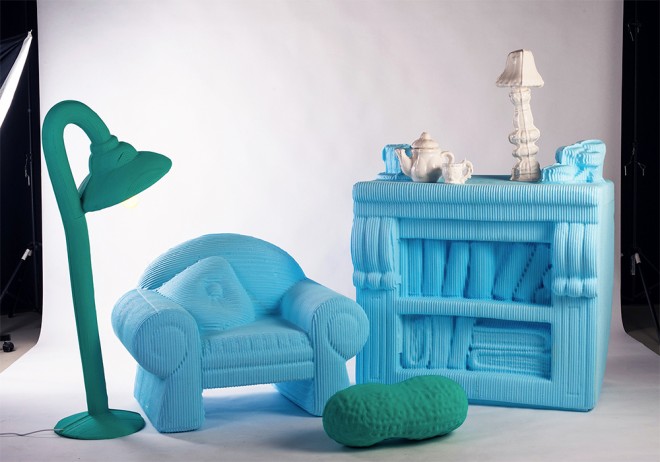
Fascinated by the emergence of digital fabrication tools, Slovakian design student Silva Lovasová decided to explore the subject for her senior thesis. She wrote a paper exploring the technical challenges of creating copies of existing objects and the design implications of a post-scarcity economy, but figuring out how to deal with the imperfections 3-D scans bring to “flawless” fabrication machines captured her imagination.
3-D scans are only as good as the object they’re based on, and unlike purely digital designs, any mass produced product will bear defects that reveal the way it was manufactured. Subtle mold lines, misalignments, and other deformities from mass production are captured in the digital data which are then passed on to the 3-D prints. Instead of minimizing these manufacturing malfunctions, Lovasová wanted to highlight them in the form of new designs.
via Wired






