

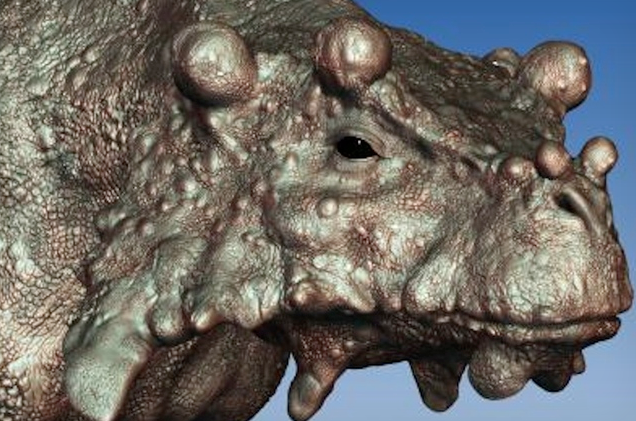
There weren’t many skin treatment solutions that we know of some 266 to 252 million years ago. But even if there had been, they wouldn’t have been able to help Bunostegos akokanensis, a giant, plant-eating reptile that roamed the central deserts of the then-single continent of Pangea. Three recently discovered fossilized skulls of this ancient animal, dug up in Niger, Africa, are covered by numerous bony protrusions resembling a bad case of acne. But the bumps, the largest of their kind ever seen on this type of animal, were most likely skin-covered horns like those on modern giraffes, according to a new analysis by scientists from the US, South Africa, and Niger. They weren’t necessarily a form of protection — instead, scientists think they served as identifying marks for the species and for individual dinosaurs, according to the BBC.
via The Verge






