

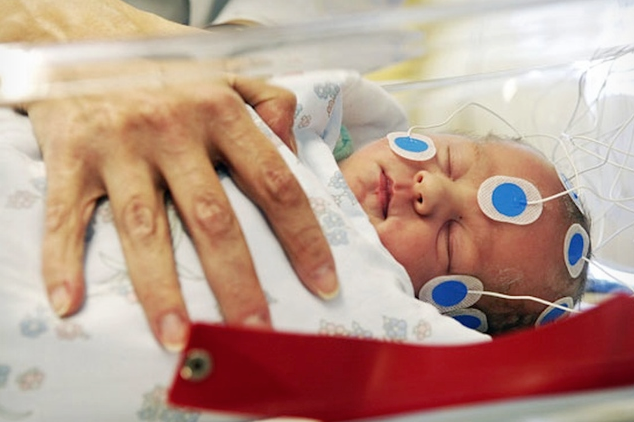
In a study out of the University of Helsinki that builds on previous investigations, a team used EEG scans on 33 newborn babies to reach that conclusion. Their research started, however, when those infants were still in the womb: moms-to-be in their third trimester were divided into two groups, with only one group listening to repeating sequences of a nonsensical word (“tatata”). Occasionally, the word would be delivered with a subtle tweak in pronunciation or tone. In all, some study participants listened to that same word a whopping — and probably insufferable — 25,000 times.
Five days following birth, the team played those same recordings to each newborn. Babies who’d been exposed to the sounds in-utero showed a specific pattern of enhanced brain activity when they heard the word, as well as a reaction known as “a mismatch response” when they heard the altered version of “tatata.” These reactions, researchers suggest, indicate a recollection of the word and its conventional delivery.
via The Verge
Image: VEIKKO SOMERPURO, UNIVERSITY OF HELSINKI






