

fresh bytes
Subscribe Now

Atomic bomb tests confirm formation of new brain cells

upshot-640x510.jpg

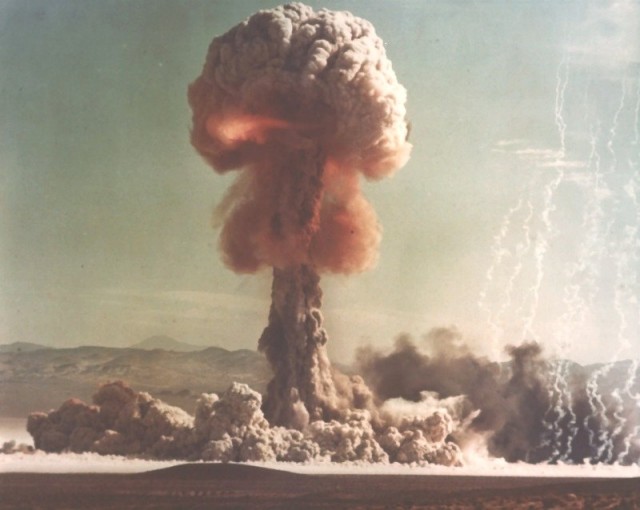
When atomic bombs were tested between 1945 and 1963, radioactive particles were released into the Earth’s atmosphere. Among the isotopes created was carbon-14, which is commonly used in radio carbon dating.

As cells divide, they incorporate carbon from the environment, and some of that carbon comes from the atmosphere. That’s why carbon-14 released by the atomic bombs found its way into the DNA of multiplying cells. The amount of carbon-14 in this DNA corresponded to its concentration in the atmosphere at the time the new cells were born.

This essentially meant carbon-14 in DNA can be used as a measure of the age of cells, such as neurons in adult brains. A team led by Jonas Frisén at the Karolinska Institute used brain cells obtained from 120 people who had consented to have their cells used for experiments after their death. Of the cells analysed, some had much higher levels of carbon-14 than others. This meant that the cells with lower levels were produced after 1963, when bomb testing ceased, and therefore showed that new cells can be produced later in life.
via Ars Technica

Continue reading

Image: Nevada.gov

Leave a Reply

featured blogs
Feb 24, 2026
How a perfectly good Bosch HVAC system was undermined by preventable mistakes, and a thermostat interface that defies logic....

featured video

Cadence Chiplets Solutions | Helping you realize your chiplet ambitions

Sponsored by Cadence Design Systems

In this webinar, David Glasco, VP of Compute Solutions at Cadence, discusses how Cadence enables customers to transition from traditional monolithic SoC architectures to modular, scalable chiplet-based solutions, essential for meeting the growing demands of physical AI applications and high-performance computing.

Read eBook: Helping You Realize Your Chiplet Ambitions

featured chalk talk

The Han® Connector
Sponsored by Mouser Electronics and HARTING
In this episode of Chalk Talk, Emily Kenny from HARTING and Amelia Dalton investigate the details of the HARTING Han® connector family. They also explore the trends in connector solutions today, the variety of options within this connector family and how you can get started using a HARTING Han® connector for your next design!
Feb 18, 2026
6,049 views





