

fresh bytes
Subscribe Now

An autonomous, self-steering robot cane for the blind

blindcane.jpg

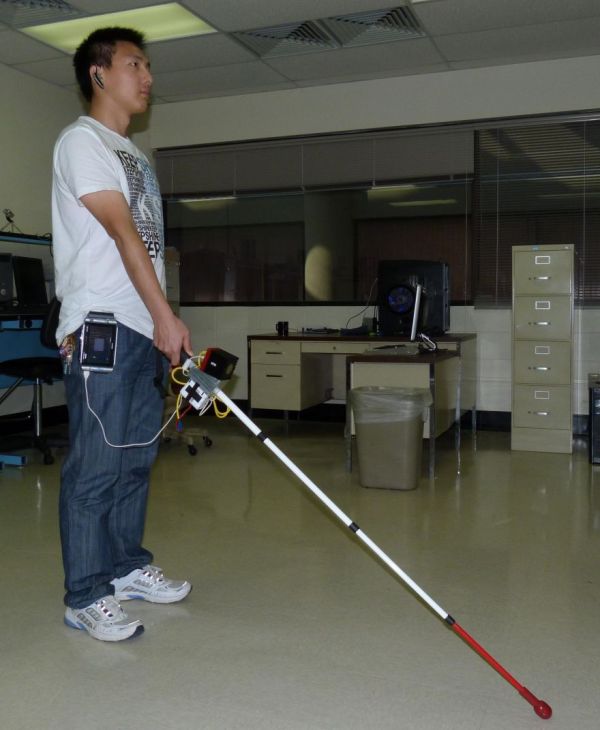
This robotic cane is the future of navigational canes used by visually impaired people. Dr. Cang Ye, a roboticist at the University at Arkansas at Little Rock, led the engineering team that developed it.

The Co-Robotic Cane (CRC) has a camera and a laser detection and ranging system that detects objects in the user’s path. It warns the user through the earpiece. The roller tip on the end also moves toward a useful path, guiding the user in that direction. Dr. Ye says that the cane will prove to be a great advance in navigational aids for the visually impaired that is far beyond that which is currently available.
via Neatorama


Continue reading 


Leave a Reply

featured blogs
Feb 24, 2026
How a perfectly good Bosch HVAC system was undermined by preventable mistakes, and a thermostat interface that defies logic....

featured video

Cadence Chiplets Solutions | Helping you realize your chiplet ambitions

Sponsored by Cadence Design Systems

In this webinar, David Glasco, VP of Compute Solutions at Cadence, discusses how Cadence enables customers to transition from traditional monolithic SoC architectures to modular, scalable chiplet-based solutions, essential for meeting the growing demands of physical AI applications and high-performance computing.

Read eBook: Helping You Realize Your Chiplet Ambitions

featured chalk talk

BMV080: World’s Smallest Particulate Matter (PM) Sensor
In this episode of Chalk Talk, Liaisan Khismatova from Bosch Sensortec and I explore the benefits of the Bosch BMV080, the world’s smallest particulate matter (PM) sensor. They also investigate the fanless innovation at the heart of the BMV080 Particulate Matter Sensor and how the silent and maintenance-free operation and ultra-compact size of this sensor makes it a game changer for next generation air quality monitoring applications. 
Jan 29, 2026
32,623 views



