

fresh bytes
Subscribe Now

A nanofabrication technique doubles hard drive capacity

double.harddiskx299.jpg

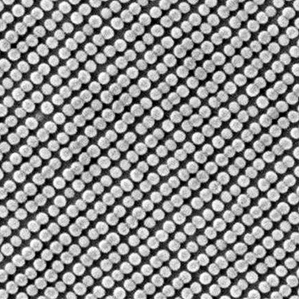
Researchers at HGST, a major manufacturer of hard disk drives, have shown that an emerging fabrication technology called nano-imprinting could be used to double the data storage capacity of today’s hard disks. They say the patent-pending work, done in collaboration with a company called Molecular Imprints, could lead to a cost-effective manufacturing process by the end of the decade.

Hard disk drives store data in magnetic material on the surface of a spinning disk. During production, this material is deposited as a thin film. Information is then written to the disk by changing the magnetic orientation of distinct individual units of the material, known as “grains.” A group of grains together make up a region that can store a single bit. Since the 1950s, when the technology was invented, hard disk manufacturers have continually found ways to keep increasing data storage capacity by reducing the area required to store a bit, most recently by using fewer and fewer clustered grains for each.
via MIT Technology Review


Continue reading 

Leave a Reply

featured blogs
Feb 24, 2026
How a perfectly good Bosch HVAC system was undermined by preventable mistakes, and a thermostat interface that defies logic....

featured video

Cadence Chiplets Solutions | Helping you realize your chiplet ambitions

Sponsored by Cadence Design Systems

In this webinar, David Glasco, VP of Compute Solutions at Cadence, discusses how Cadence enables customers to transition from traditional monolithic SoC architectures to modular, scalable chiplet-based solutions, essential for meeting the growing demands of physical AI applications and high-performance computing.

Read eBook: Helping You Realize Your Chiplet Ambitions

featured chalk talk

BMV080: World’s Smallest Particulate Matter (PM) Sensor
In this episode of Chalk Talk, Liaisan Khismatova from Bosch Sensortec and I explore the benefits of the Bosch BMV080, the world’s smallest particulate matter (PM) sensor. They also investigate the fanless innovation at the heart of the BMV080 Particulate Matter Sensor and how the silent and maintenance-free operation and ultra-compact size of this sensor makes it a game changer for next generation air quality monitoring applications. 
Jan 29, 2026
36,915 views



