

fresh bytes
Subscribe Now

3D-printed rocket parts stand up to the heat in NASA hot-fire tests

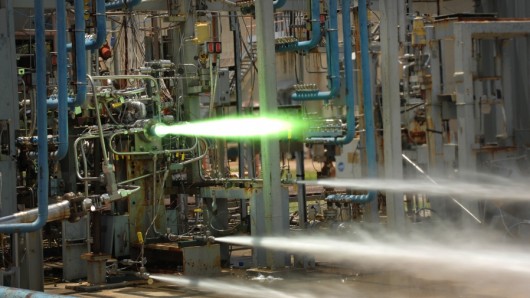
3dprintedrocketengineparts.jpg

3D printing technology has already made the move from engineering workshop to the home, and now it’s set to make its mark in space. NASA has hot-fire tested 3D-printed rocket engine components, which have managed to withstand incredibly high temperatures and pressures to the same standard as traditionally manufactured parts. Being cheaper and faster to produce, 3D-printed parts have the potential to revolutionize the manufacturing of rocket engine components and save the space agency considerable time and money.
via Gizmag


Continue reading

Leave a Reply

featured blogs
Feb 24, 2026
How a perfectly good Bosch HVAC system was undermined by preventable mistakes, and a thermostat interface that defies logic....

featured video

Cadence Chiplets Solutions | Helping you realize your chiplet ambitions

Sponsored by Cadence Design Systems

In this webinar, David Glasco, VP of Compute Solutions at Cadence, discusses how Cadence enables customers to transition from traditional monolithic SoC architectures to modular, scalable chiplet-based solutions, essential for meeting the growing demands of physical AI applications and high-performance computing.

Read eBook: Helping You Realize Your Chiplet Ambitions

featured chalk talk

BMV080: World’s Smallest Particulate Matter (PM) Sensor
In this episode of Chalk Talk, Liaisan Khismatova from Bosch Sensortec and I explore the benefits of the Bosch BMV080, the world’s smallest particulate matter (PM) sensor. They also investigate the fanless innovation at the heart of the BMV080 Particulate Matter Sensor and how the silent and maintenance-free operation and ultra-compact size of this sensor makes it a game changer for next generation air quality monitoring applications. 
Jan 29, 2026
35,996 views



