My podcast guest this week is Ferric CEO Noah Sturcken. Noah and I discuss how Ferric’s innovations—specifically their ferromagnetic materials and on-chip power converters—are addressing the critical power, efficiency, and integration hurdles facing today’s AI processors. We also explore how IVRs enable higher instantaneous power delivery, simplify board design, and reshape processor architecture, and where Noah sees Ferric headed in the future. </ … Read More → "Powering AI: Ferric’s IVR Revolution for High‑Performance Processors"
There are many ways to categorize engineers—to “slice and dice” them, if you will. I’m speaking figuratively, of course (we don’t want anyone to get any unfortunate ideas…especially since… the incident). Just sticking to the electronics realm, we have analog and digital, hardware and software, those who simulate and those who solder, those who document and those who don’t—and the French.
… Read More → "Verification Engineers Are Poised to Become Verification Scientists"
I think most of us have come to appreciate how incredibly useful AI can be, and it’s getting more efficacious every day. The funny thing is that it’s becoming harder to remember a time before AI (much like younger people being unable to visualize a world without high-definition flat-screen TVs, smartphones, wireless connectivity, and the internet).
Although researchers from many fields—computer scientists, mathematicians, neuroscientists, … Read More → "When AI Comes Home to Roost: Meet the SYN765x Wi-Fi-7 AI-Native Connected MCU"
In this week’s Fish Fry podcast, we’re casting our line into one of the most transformative shifts happening in the automotive industry today: the rise of software-defined systems! Nitish Rao from MathWorks and I take a closer look at which vehicle functions are best handled by AI-driven systems, and which still depend on the reliability of traditional control software and how virtual ECUs and … Read More → "Driving the Code: Where the Rubber Meets the Software-Defined Road"
I don’t like change. I know I’m starting to sound like an old codger, but that’s OK because I am an old codger (I know the secret handshake and I have the ceremonial undergarments T-Shirt to prove it). For example, I remember going to the Design Automation Conference (DAC) year after year throughout the 1980s. The same companies were there each time, but it … Read More → "Three Companies, One Toolchain: The Rise of TASKING 3.0"
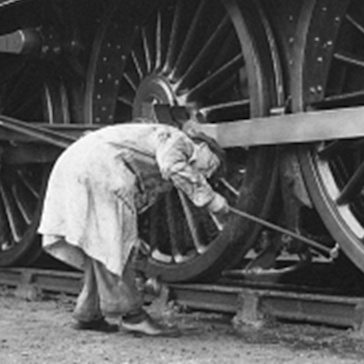
I constantly amaze myself by the vast quantities of useless nuggets of knowledge and tidbits of trivia that are rattling around in my poor old noggin. These typically resurface when I least expect them. For example, I could be discussing AI systems with someone, and—as improbable as it may sound—one of the examples they give might trigger thoughts of a man bending over tapping a railway wheel … Read More → "The Curious Case of the Waning Wheeltapper"