



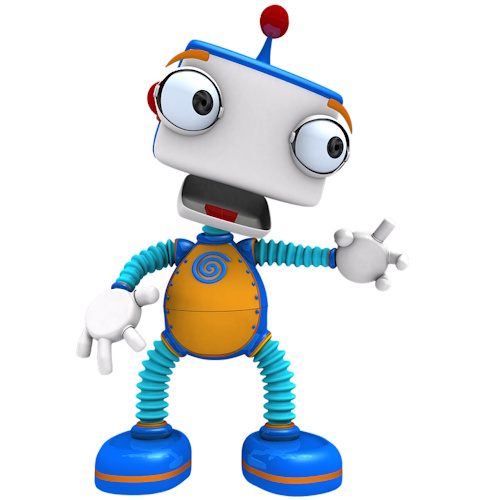
As usual, I find (what I laughingly call) my mind to be well and truly boggled. When I was a young lad, AI-powered autonomous humanoid robots were the stuff of science fiction. Although I longed for them to become reality, I never really hoped to see them in my lifetime. Now, even though we’re still in the early era of humanoid robotics, these machines are already being deployed in real-world commercial and industrial settings such as warehouses, logistics facilities, and even select retail environments.
When I was a kid in the 1960s, the kinds of robots we saw in movies and on TV were like Robby the Robot, which first appeared in the 1956 classic Forbidden Planet, and a somewhat similar creation simply known as Robot from the TV series Lost in Space (see also The Atomic Snack Bar’s look at Top 1960s Sci-fi Robots).
Later, I was introduced to the positronic brains featured in the robots presented in Isaac Asimov’s classic short stories, which were gathered in I Robot (which is nothing like the film with Will Smith) and The Rest of the Robots (a copy of which is sitting on my desk as we speak). And, of course, Asimov also gifted us with gems like The Caves of Steel, The Naked Sun, and The Bicentennial Man.
The problem was that, until relatively recently, we didn’t have everything we needed to bring real-world humanoid robots to fruition. And then the current era of AI stormed onto the scene with a figurative fanfare of flugelhorns, accompanied by a flurry of fantastical developments in sensors, actuators, and algorithms.
Actually, this is probably a good place to pause to note that “humanoid” does not necessarily mean “human-looking.” In robotics, “humanoid” generally means a robot that has a human-like body plan, including an upright torso, two arms, two legs (bipedal locomotion), and a head or sensor “pod” where a head would be. We’re talking about something that can move through human environments the way humans do (walks on two legs, climbs stairs, reaches shelves…) and can use tools, spaces, and infrastructure built for humans.
Some robots look more humanoid, like Tesla’s Optimus, which emphasizes human-like proportions, a clearly defined head, torso, arms, and legs, hands with articulated fingers, and a smooth, anthropomorphic exterior. All this makes Optimus visually and culturally humanoid—closer to how people intuitively imagine a “robot person” (I don’t think we need to talk about Optimus’s famous fall here, so we won’t).
By comparison, Agility Robotics’ Digit doesn’t prioritize human-like proportions, hands with five fingers, or cosmetic human resemblance. Having said this, Digit absolutely qualifies as humanoid because it has bipedal locomotion (this is the big one), a torso with two arms, a sensor head mounted above the torso, human-scale reach and height, and the ability to operate in human-designed spaces. I was just watching this video of Digit in action.
Just a couple of months ago, at the time of this writing, the folks at Agility Robotics announced: Digit Moves Over 100,000 Totes in Commercial Deployment. I don’t know about Digit, but if I’d moved 100,000 totes, I’d feel like celebrating, too.
A useful way to frame the distinction is that anthropomorphic humanoids like Optimus are designed to resemble humans in form and motion, while functional humanoids like Digit are designed to work in human environments with the minimum necessary human-like structure. Both are humanoid; they just sit at different points on the spectrum.
What was once a niche research pursuit has exploded into a crowded landscape, with a myriad of companies actively involved in humanoid robot development in one way or another. For example, four companies of interest are as follows:
- Cartwheel Robotics is a startup that aims to build interactive, human-centric robots that feel as natural and companionable in daily life as they are capable. Its flagship platform, exemplified by the Yogi robot, blends traditional utility with adaptive behavior and emotional awareness, and targets a range of settings, from healthcare and hospitality to home and research environments. Cartwheel’s approach emphasizes embodied learning and continuous capability growth, enabling robots to learn new skills over time and interact safely and intuitively with people, rather than simply executing predefined tasks. This focus on affective and adaptive interaction in real-world environments positions Cartwheel as a bridge between today’s industrial robots and tomorrow’s socially capable humanoids.
- Ridescan develops AI-driven monitoring platforms that improve the reliability, safety, and performance of autonomous and robotic systems by predicting component-level issues before they cause failures. Rather than building robots itself, RideScan contributes critical enabling software infrastructure that supports robust operations and safety, which is essential as humanoid and other autonomous robots are deployed at scale in dynamic human environments. By helping machines anticipate and avoid problems, RideScan’s technology enhances the resilience and uptime of complex robotic systems, a foundational capability for the broader adoption of humanoids across industry.
- Formic Technologies brings a “robots-as-a-service” (RaaS) model to industrial automation, offering full integration, deployment, and ongoing maintenance under subscription-style pricing. This business model lowers the barrier to entry for manufacturers to adopt automation, including robotics that might evolve toward humanoid functions, by reducing heavy upfront capital costs and handling operational complexity. While not a humanoid maker per se, Formic’s service- oriented approach supports broader robotic deployment in real industrial settings and could accelerate the integration of future humanoid platforms into workflows by providing scalable, managed automation solutions.
- HowToRobot operates a global marketplace and information network that connects robotic solution providers with companies seeking automation. Its platform simplifies the discovery, comparison, and procurement of robotic systems, helping organizations of all sizes identify the right technologies for their needs. By streamlining access to automation expertise and suppliers, HowToRobot fosters broader robotics adoption, which in turn creates a more fertile ecosystem for humanoid technologies to find real-world applications and integrations. This ecosystem-building role is increasingly important as robots diversify in form and capability.
“Well, that’s a mixed bag of companies, and no mistake,” I can hear you muttering under your breath, “but what do all these enterprises have to do with each other?” I’m glad you asked, else I would have been obliged to find some cunning way to work this into the conversation.
It turns out that the publicly traded investment issuer Humanoid Global has made strategic investments in companies across that value chain, from early-stage startups to more developed platforms, including all of the aforementioned entities. The reason I know this crunchy nugget of knowledge is that I was just chatting with Humanoid Global’s CEO, Shahab “Sean” Samimi.
To be honest, I’m rarely interested in the business side of things—I’m much more of a technophile—but I was certainly interested in what Shahab had to say. He started by explaining how, at their core, investment companies exist to pool capital from individuals and institutions and put that money to work by investing in businesses they believe will grow in value over time. When those businesses succeed, investors share in the upside; when they struggle, the risks are shared as well.
Crucially, not all investment firms are alike. Some spread their bets broadly across markets and industries, while others focus tightly on specific sectors or technological themes they believe will define the future. Humanoid Global falls squarely into the latter camp, with a singular mission: investing exclusively in companies dedicated to advancing the development, commercialization, and deployment of humanoid robots.
While there are now multiple ways for investors to gain exposure to the emerging world of humanoid robots—including specialized Exchange Traded Funds (ETFs) and corporate/VC backing for startups—Humanoid Global stands out as one of the few publicly traded investment issuers with a dedicated mission to build and accelerate a portfolio exclusively around humanoid robotics and embodied AI technologies.
Importantly, Humanoid Global isn’t simply betting on individual robot platforms. Its strategy is to invest across the entire physically embodied-AI stack—from humanoid platforms themselves to enabling software, sensing, actuation, safety, and operational infrastructure—on the premise that humanoids succeed only as part of a broader ecosystem.
Also, unlike many traditional investors, Humanoid Global isn’t constrained by geography or company stage (i.e., where a company is in its lifecycle). Its portfolio spans early-stage startups, later-stage scale-ups, and secondary opportunities, with investments across North America and Europe, and an active interest in Asia.
So, if you have any spare cash you wish to splash, or if you are involved in developing and deploying humanoid robots, and you could do with someone to splash some cash your way, then you should reach out to the folks at Humanoid Global (you can even email Shahab directly and tell him “Max says Hi”).






