

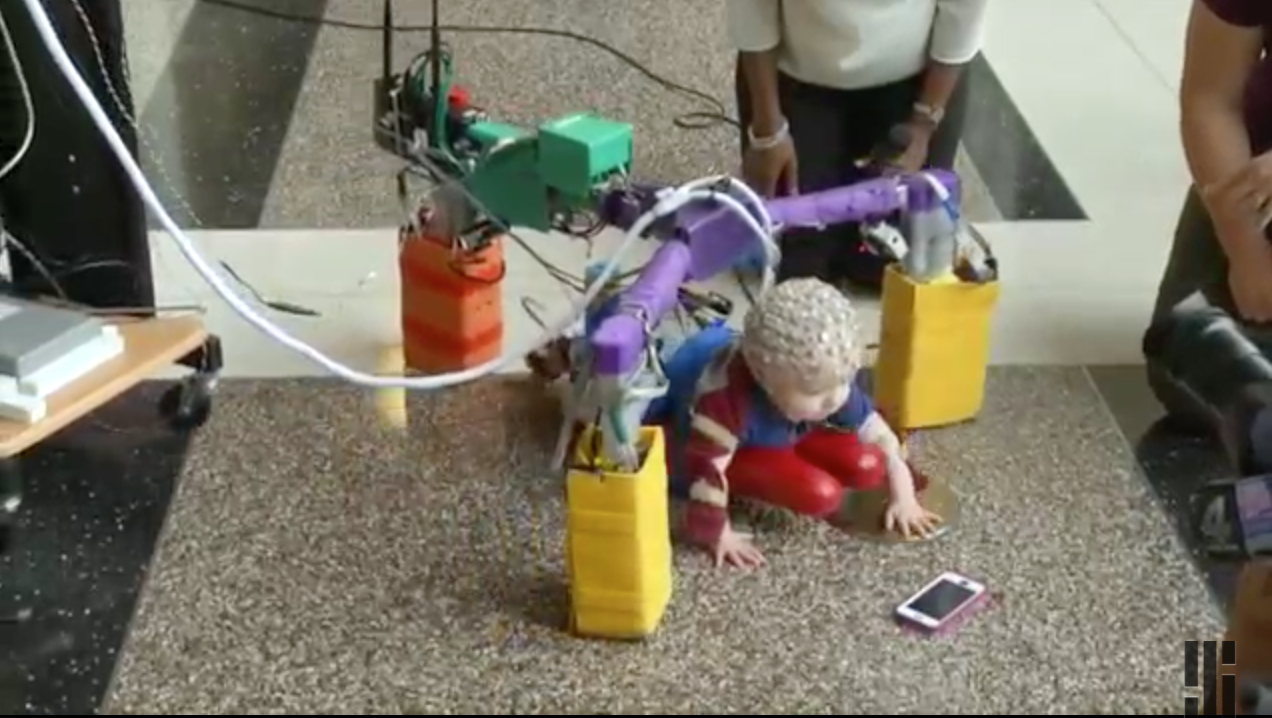
University of Oklahoma’s robotic exoskeleton for babies does two things: (1) make the kiddos look like tiny Dr. Octopuses and (2) help prevent cerebral palsy. The motorized device has power steering that gives babies at risk of the illness a little push needed to be able to move and crawl like their peers can. See, the condition can be caused brain damage, infections and injuries early in a person’s life. To combat the illness, therapy must start as early as possible — unfortunately, it’s not typically diagnosed until a child turns one year old.
The good news is that one of this team’s original members developed a method to detect which babies between two and eight months old are most likely to develop cerebral palsy. Since children at risk of the disease can’t move their bodies the way they want to, they stop trying to crawl after a while, causing the brain to stop developing new motor skills. This machine provides the push they need to crawl normally, promoting brain growth and the formation of motor skills.
via Engadget






