

fresh bytes
Subscribe Now

Robot octopus takes to the sea

robot-octopus-1411564675191.png

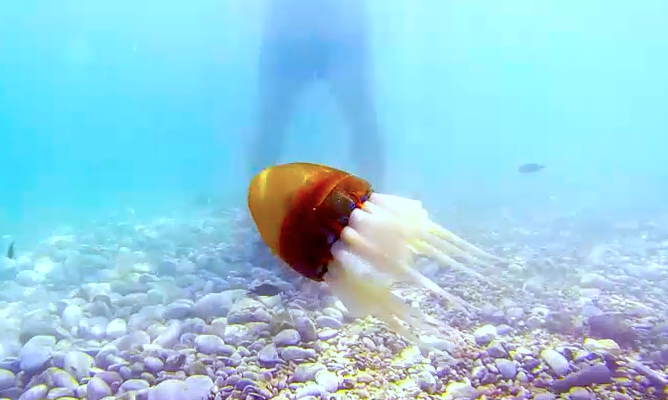
Early last year, we wrote up some betentacled research from Greece that explored what gaits were most effective at propelling a robotic octopus through water. The researchers commented that they were working on adding another physical feature flaunted by the biological version of the octopus: a web between their tentacles, which they hypothesized might help swimming speed or efficiency. Now the researchers report that the addition of a soft and supple silicone web has nearly doubled the speed of the roboctopus, and not satisfied with that, the scientists have also taught it to crawl, carry objects, and swim free in the Aegean Sea.
via  IEEE Spectrum

Continue reading

Image: FORTH

Leave a Reply

featured blogs
Feb 6, 2026
In which we meet a super-sized Arduino Uno that is making me drool with desire....

featured chalk talk

BMV080: World’s Smallest Particulate Matter (PM) Sensor
In this episode of Chalk Talk, Liaisan Khismatova from Bosch Sensortec and I explore the benefits of the Bosch BMV080, the world’s smallest particulate matter (PM) sensor. They also investigate the fanless innovation at the heart of the BMV080 Particulate Matter Sensor and how the silent and maintenance-free operation and ultra-compact size of this sensor makes it a game changer for next generation air quality monitoring applications. 
Jan 29, 2026
21,248 views





