

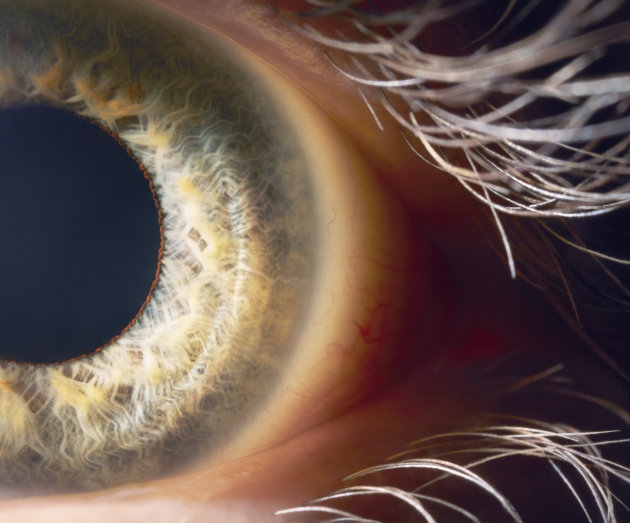
When your eyes’ photoreceptors (the so-called rods and cones) fail due to either illness or injury, so too does your vision. And until very recently, few options to correct the condition existed — typically in the form of a bulky and intrusive wearable. But now, a long-researchedgene therapy is finally ready for human trials and could pave the way for at least partial restoration of a patient’s sense of sight.
The technique, which was developed by a team led by Zhuo-Hua Pan of Wayne State University in Detroit, is part of a growing scientific field known as optogenetics. It doesn’t target the dead photoreceptors themselves — in fact, it bypasses them entirely — instead focusing on the ganglion cells behind them. Ganglion cells carry electrical signals from the rods and cones to the optic nerve, which then shuttles the information to the brain.
via Engadget
Image: Tim Flach/Getty






