fresh bytes archive
Subscribe Now

Self-assembling robots could one day replicate objects

2037355_TE_MIT_cube_robots.jpg

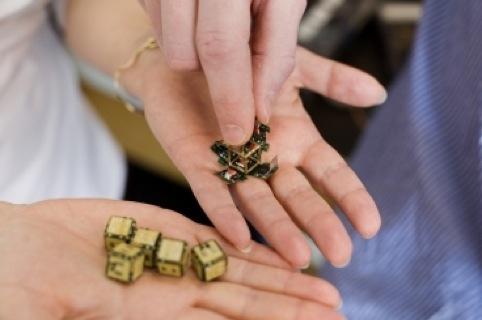
Researchers in the US are developing tiny robots that can assemble themselves into products and then disassemble when no longer needed. 

These magnetic cubes, described as ‘smart pebbles’ or ‘smart sand’, could one day replicate an object by surrounding it, determining its shape and then joining together to form a copy or larger version of the object.

Read More → "Self-assembling robots could one day replicate objects"
25 years of IBM’s OS/2: the strange days and surprising afterlife of a legendary operating system

It was one of the most ambitious computer product announcements in history. On April 2, 1987, at twin press conferences in New York and Miami, IBM unveiled its plans to reinvent the PC industry which it had jump-started less than six years earlier with the introduction of the first IBM PC. The company introduced four new computers dubbed the PS/2 line, including an $11,000 model which it said was seven times faster than current models. The new products were rife with advanced features, including 32-bit processors, fancy graphics, 3.5″ hardshell floppy-disk drives and optical storage.

And the new … Read More → "25 years of IBM’s OS/2: the strange days and surprising afterlife of a legendary operating system"

IBM lands contract to research exascale computing for astronomy

ibm-dome.jpeg

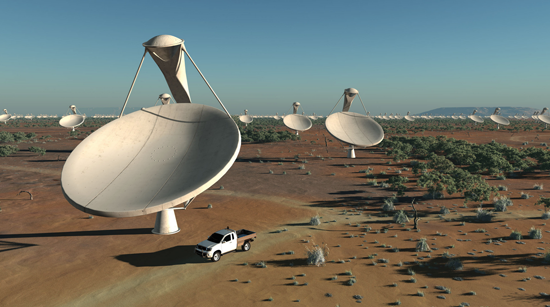
IBM has announced that it has landed a massive contract to develop a new supercomputer and related technology to help decipher the huge amount of data collected by the Netherlands Institute for Radio Astronomy (ASTRON). The contract is worth $42 million and will have IBM working with ASTRON to research exascale computer systems.
via Read More → "IBM lands contract to research exascale computing for astronomy"

Shannon’s Mathematical Theory of Communication applied to DNA sequencing

Shotgun_sequencing.png

One of the great unsung heroes of 20th century science is Claude Shannon, an engineer at the famous Bell Laboratories during its hey day in the mid 20th century. Shannon’s most enduring contribution to science is information theory: the idea that underpins all digital communication. 

In a famous paper dating from the late 1940s, Shannon set out the fundamental problem of communication: to reproduce at one point in space, a message that has been created … Read More → "Shannon’s Mathematical Theory of Communication applied to DNA sequencing"

IBM’s $43 million computer for the world’s largest radio telescope

Screen_Shot_2012-04-02_at_9.41.54_AM.png

When it’s built, the Square Kilometer Array will be the world’s largest radio telescope. Then, when it goes online, it will spit out 1,000,000 terabytes of data each day—and IBM is trying to make a computer which can handle it.

The Squarer Kilometer Array—which will be made up of 15,000 small antennas and 77 larger stations—will … Read More → "IBM’s $43 million computer for the world’s largest radio telescope"

Robotspeak: An electronic musician’s toy store

Robotspeak does not sell actual robots — though I never tired of getting that question from people who wandered through the door. There are many delightful things you buy on San Francisco’s historic Haight Street, but to the best of my knowledge, robots are not one of them.

In spite of the occasional befuddlement of robot shoppers, Robotspeak is a fitting name for a shop that specializes in the type of unique audio gear and music recording software perfect for composing symphonies of synthetic bleeps and squelches.

Robotspeak’s walls are lined with synthesizers, … Read More → "Robotspeak: An electronic musician’s toy store"

Computer outperforms humans at detecting lies, by watching the speaker’s eyes

If the movie 2001: A Space Odyssey taught us anything, it’s that computers know when we’re telling a lie. While that may not actually be the case for most computers in real life, it could be if they’re running a program created by scientists from the University at Buffalo. Building on a previous psychological study, the team produced software that allowed a computer to assess a speaker’s eye movements, to determine whether or not they were telling the … Read More → "Computer outperforms humans at detecting lies, by watching the speaker’s eyes"

Sand Flea robot leaps onto tall buildings 30ft high

It doesn’t look like much, kind of a simple RC car. That is, until it jumps.

Boston Dynamics just released a video of their Sand Flea robot, and man can it jump. It rolls around, then stops, rears back on its hind wheels, and springs over walls and onto roofs – up to 30 feet high! It’s jumping is accurate enough that it can even leap into a second story window. You wanna scare the neighbors?

A CO2-powered piston gives the 11 pound Sand Flea its jumping power. … Read More → "Sand Flea robot leaps onto tall buildings 30ft high"

featured blogs
Feb 6, 2026
In which we meet a super-sized Arduino Uno that is making me drool with desire....