
Last Wednesday, a group of researchers at the European Bioinformatics Institute reported in the journal Nature that they had managed to store digital information in synthetic DNA molecules, then recreated the original digital files without error.


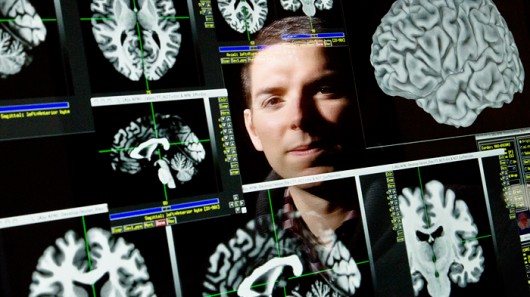
We tend to think of reason and emotion as being two different things, but it turns out that there may not be a choice between the heart and the head. A University of Illinois team, led by neuroscience professor Aron Barbey, has made the first detailed 3D map of emotional and general intelligence in the brain, that shows a strong overlap of general and emotional intelligence.
via Read More → "U.S. researchers map emotional intelligence of the brain"

The Art of Betrayal: The Secret History of MI6: Life and Death in the British Secret Service tells the story of MI6’s transformation since the end of WWII, using stories and anecdotes from actual, real-life agents who worked through and helped shape the course of world events over the last 70-or-so-years.
via Read More → "The Art of Betrayal: The Secret History of MI6"
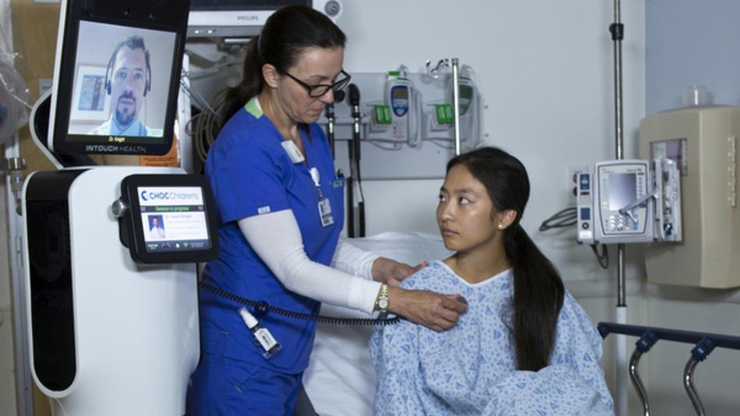
Remember iRobot’s RP-VITA telepresence robot? The U.S. Food and Drug Administration (FDA) has cleared it for operation in hospitals, making it the first of its kind.
The RP-VITA is a telepresence robot controlled by an iPad interface and allows a doctor to “visit” patients and hospital staff remotely. Its navigation is sophisticated to the point where it can be told to go to a specified location without crashing into things at a … Read More → "iRobot’s telepresence robot first approved for hospital use"
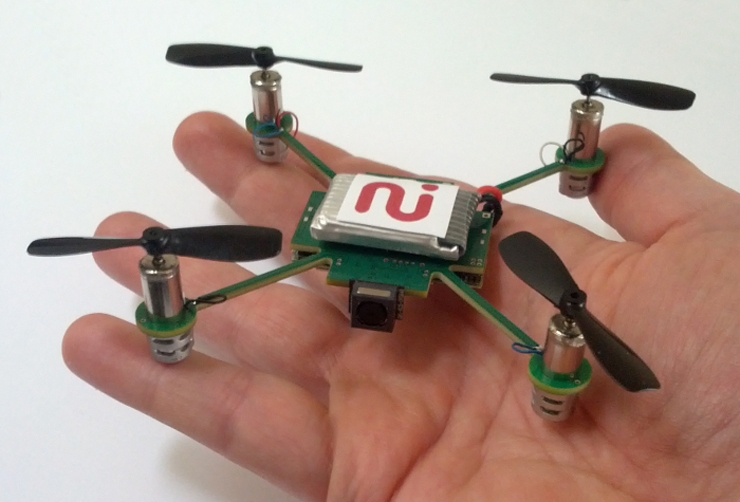
Quadcopters come in all different shapes and sizes, with most of them skewing on the large side. The MeCam goes small — tiny enough to fit in the palm of your hand — and brings a few neat tricks with it.
The MeCam (not to be confused with this other product with the same name) is as barebones as a quadcopter gets. Its four tiny propellers carry a module … Read More → "Voice-controlled quadcopter follows you around, films everything"
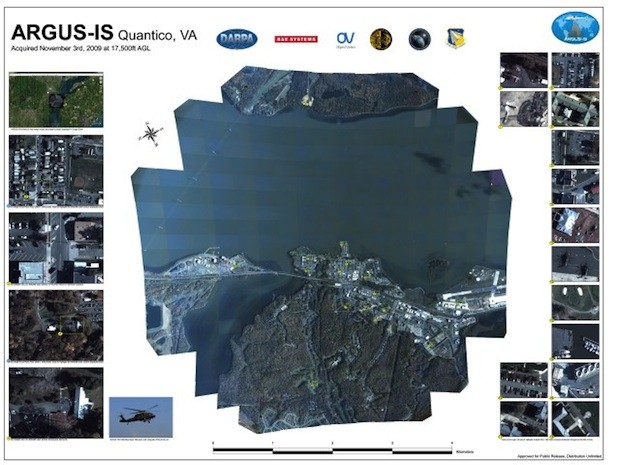
It’s been three years since we first heard about DARPA’s ARGUS-IS, but thanks to a PBS Nova special entitled “Rise of the Drones,” we finally have more information about the 1.8-gigapixel camera that is supposedly the highest-resolution surveillance system in the world. The documentary showed video footage of the imaging system in action, though the camera itself remains shrouded in … Read More → "DARPA’s 1.8-gigapixel cam touts surveillance from 20,000 feet"
Last Wednesday, a group of researchers at the European Bioinformatics Institute reported in the journal Nature that they had managed to store digital information in synthetic DNA molecules, then recreated the original digital files without error.
The amount of data, 739 kilobytes all told, is hardly prodigious by today’s microelectronic storage standards: all 154 of Shakespeare’s sonnets, a … Read More → "A conversation with Nick Goldman: using DNA to store digital information"
Sometime last week, while you were at work, or at home, or at school, a little robot built here on Earth shone its lights onto a tiny patch of rocks on a planet about 200 million miles away, and — click — it took a picture, and sent that picture back home.
Using the camera at the end of its long robotic arm, Curiosity has taken a picture of a rock illuminated by the rover’s ultraviolet LEDs.
Read More → "A surprisingly beautiful photo of Mars at night, courtesy of NASA’s Curiosity Rover"

The SFJAZZ Center, America’s first freestanding concert hall specifically built for jazz performance, opened last Wednesday in San Francisco. The 700 seat Center is the new home of SFJAZZ, a 30 year old non-profit organization dedicated to the presentation of jazz and related music forms. NPR Music has posted excerpts from the opening night concert.
… Read More → "SFJAZZ Center, America’s first concert hall specifically built for jazz"
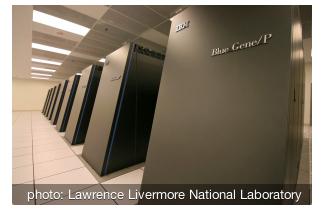
Chances are, the quad-core processor powering your desktop computer or high-end laptop is vastly underworked. But it’s not your fault: Writing code that executes in parallel is difficult, so most consumer applications (save for some compute-intensive video games that really need help, for example) continue to run on just one core at a time. Which makes it all the more impressive that a … Read More → "While we waste four cores, scientists use a million at a time"

Would you use this shadeless umbrella? Meet James Dyson Award entry Airblow 2050
… Read More → "A prospective umbrella which uses air to protect user from the rain"





