fresh bytes archive
Subscribe Now

Take a metronome. Then take another. Then another. Set them ticking at different times. Look. Lift. Watch.

If this wasn’t a science page, if this happened 3,000 years ago in, say, a Middle Eastern desert, I would call it a Miracle. But it’s not. It’s just a plain, ordinary moment of “wow!”

First, the beginner’s version. A man takes a bunch of metronomes, sets them ticking in different ways, then — and this is the crucial part — he lifts them collectively off the table, so their different motions now start to offset each other. And this happens:

Read More → "Take a metronome. Then take another. Then another. Set them ticking at different times. Look. Lift. Watch."

An unsettling reminder to water your plants

plantwater1.jpg

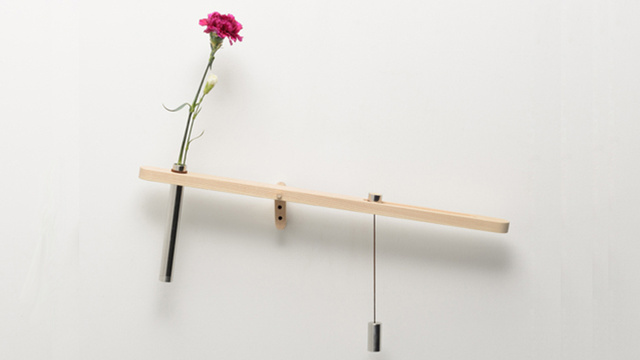
Keeping flowers or plants in your house is supposed to make things more beautiful, not chaotic. But this vase is only balanced when the flowers have water. If too much liquid evaporates, the counter-weight pulls one side of the vase down.
via Gizmodo

plantwater2. … <a href=Read More → "An unsettling reminder to water your plants"

Honeybees trained to sniff out landmines in Croatia

bee.jpg

Nikola Kezic, a professor in the Department of Agriculture at Zagreb University, has been exploring using bees to find landmines since 2007. Croatia, Bosnia-Hercegovina, and other countries from former Yugoslavia still have around 250,000 buried mines that were left there during the wars of the early 90s. Since the end of the war, more than 300 people have been killed in Croatia alone by the explosives, including 66 de-miners.

Tracking down the mines can be extremely … Read More → "Honeybees trained to sniff out landmines in Croatia"

Thin-film solar cells could become more efficient – thanks to moths’ eyes

motheyethinfilminterference.jpg

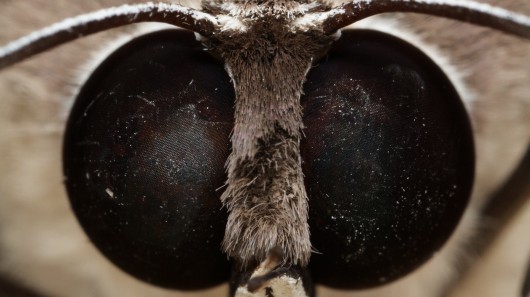
Because moths need to use every little bit of light available in order to see in the dark, their eyes are highly non-reflective. This quality has been copied in a film that can be applied to solar cells, which helps keep sunlight from being reflecting off of them before it can be utilized. Now, a new moth eye-inspired film may further help solar cells become more efficient.

The film, developed at North … Read More → "Thin-film solar cells could become more efficient – thanks to moths’ eyes"

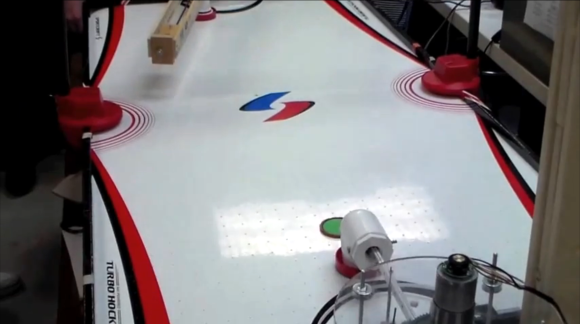
Robot air hockey championship as a final project (video)

clemson-air-hockey-robots.png

My final project is build a robot that plays air hockey? Where do I sign up? Apparently you get yourself a seat in ECE496 at Clemson University. They have been using the concept as a final project for at least a couple of years. [Abe Froman] was on the winning design team this year and he’s showing off his robot and some winning games it played.
via Read More → "Robot air hockey championship as a final project (video)"

featured blogs
Feb 24, 2026
How a perfectly good Bosch HVAC system was undermined by preventable mistakes, and a thermostat interface that defies logic....