

fresh bytes
Subscribe Now

NASA tests robotic gas station attendant for outer space

st_roboticrefueling2_f.jpeg

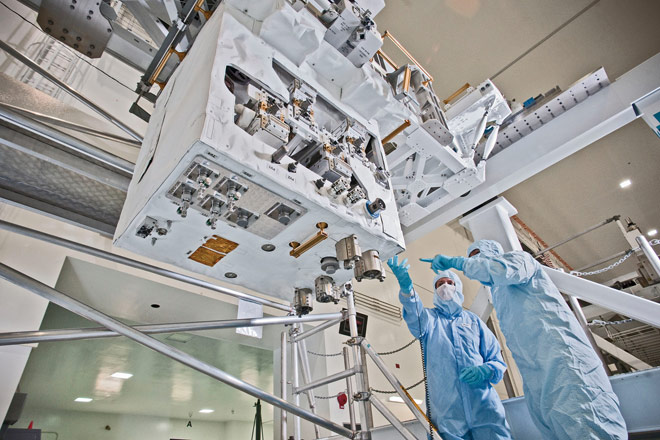
Satellites use solar energy to power their electronics, but they rely on gas to maintain orbit or change position. Once tapped out, dead satellites become space junk, which threatens new orbital ventures. To prevent this, NASA is testing the feasibility of using robots to fuel and repair satellites on the fly or tow them to a new job site.

The agency’s Satellite Servicing Capabilities Office has identified 242 end-of-lifers destined to run out of gas in the next five to six years. The challenge is that, for now, before a satellite leaves the ground, technicians fill its fuel tank and seal it—for good. “No satellite in orbit was designed to be serviced, because no servicer exists,” says Ben Reed, an engineer at NASA’s Goddard Space Flight Center.
via Wired


Continue reading

Leave a Reply

featured blogs
Feb 18, 2026
Because sometimes the best replacement part'¦ is the one you already have!...

featured chalk talk

BMV080: World’s Smallest Particulate Matter (PM) Sensor
In this episode of Chalk Talk, Liaisan Khismatova from Bosch Sensortec and I explore the benefits of the Bosch BMV080, the world’s smallest particulate matter (PM) sensor. They also investigate the fanless innovation at the heart of the BMV080 Particulate Matter Sensor and how the silent and maintenance-free operation and ultra-compact size of this sensor makes it a game changer for next generation air quality monitoring applications. 
Jan 29, 2026
29,208 views



