

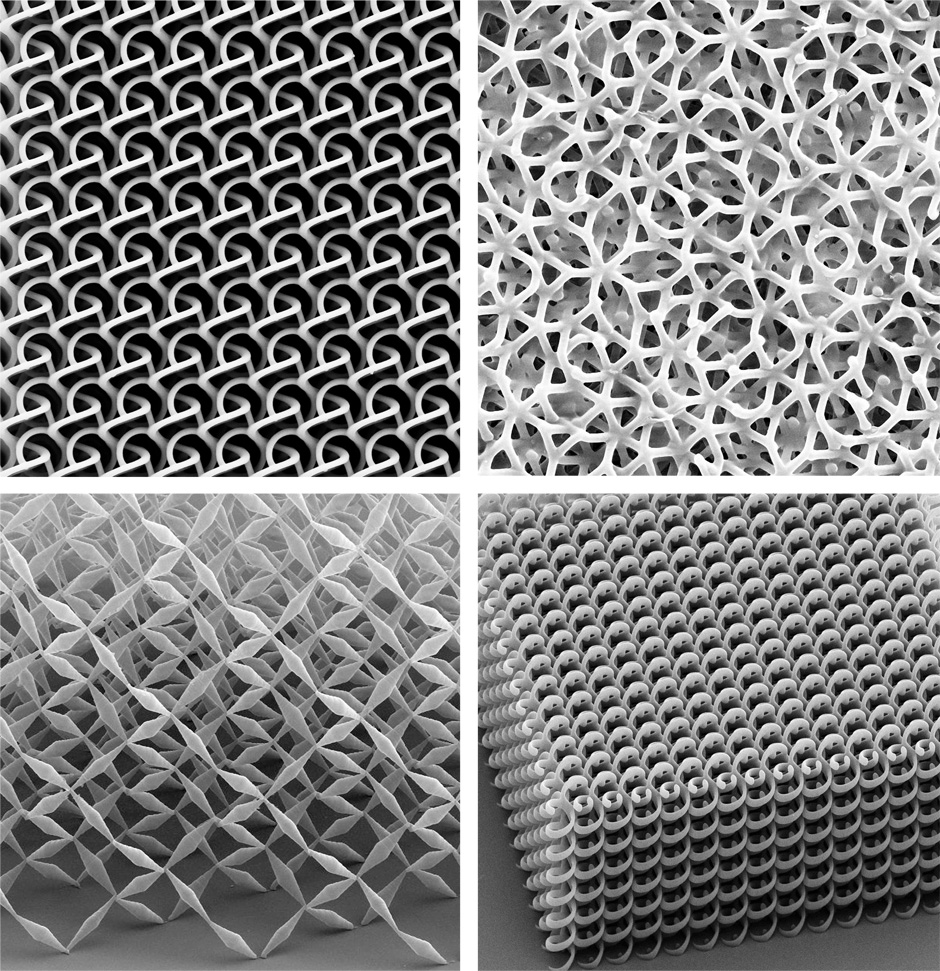
Researchers have long believed that it would someday be possible to produce artificial materials, or “metamaterials,” and that they would bring about some stunning, otherworldly technologies—the sort that have figured in science fiction tales for years. These innovations include invisibility cloaks that could mask the presence of objects or their electromagnetic signatures, “unfeelability cloaks” that could mechanically mask the tactile feel of an object, superlenses that could resolve features too small to be seen with ordinary microscope lenses, and power absorbers that could capture essentially all of the sunlight hitting a solar cell.
To achieve these advances we’ll need better metamaterials, and those are on the way. Metamaterials are made up of “meta-atoms”—small two- or three-dimensional structures made of polymer, dielectric material, or metal. When these structures are arranged in regular, repeating crystals, they can be used to manipulate electromagnetic radiation in new ways.
via IEEE Spectrum






