

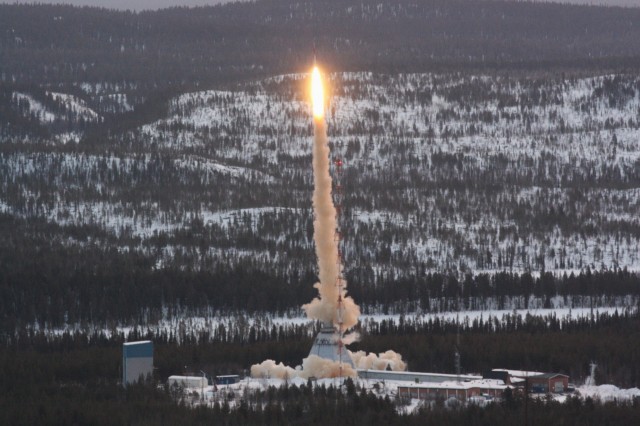
The ability of biomolecules—and entire organisms—to survive space has implications for a number of scientific questions: whether molecules from space could have seeded life on Earth, or whether life could spread among the inner planets following impacts. It also has practical implications, in that it dictates how careful we need to be in sterilizing hardware we send to other planets.
Chance gave some biologists access to a rocket, and they figured out a way to answer one of the questions. While prepping a sounding rocket for an experiment that briefly lofted some of their samples to space, they decided to put some DNA on the rocket’s exterior. And when it returned to Earth 780 seconds later, they were able to recover the DNA and put it to use.
via Ars Technica
Image: University of Zurich






