

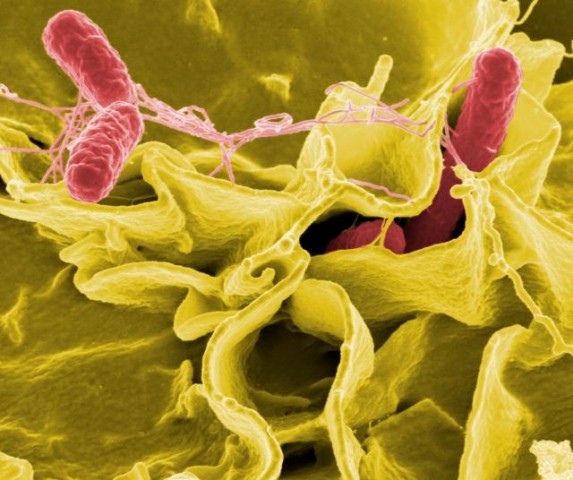
In order to study the mutation rates of bacteria cells on a smaller scale, scientists from the University of Manchester’s Faculty of Life Sciences introduced E. Coli samples to various amounts of food, then treated them with the antibiotic rifampicin and rounded up the surviving bacteria, which had mutated a resistance to the antibiotic. They found that the bacteria which multiplied much more slowly and in lower densities was much more likely to develop that resistance, at a rate of three times that of the higher-density, faster-multiplying bacteria.
“I find it pretty surprising that this hasn’t been pinned down before,” lecturer Christopher Knight also said. He suggested that this phenomenon might have been overlooked because most scientists tend to look only at specially-engineered strains of bacteria, which mutate at hundreds of times the normal pace.
via Geekosystem
Image: NIAID






